10% off on product page · save $2.11
What Are the 7 Basic Functional Movements? A Simple Guide
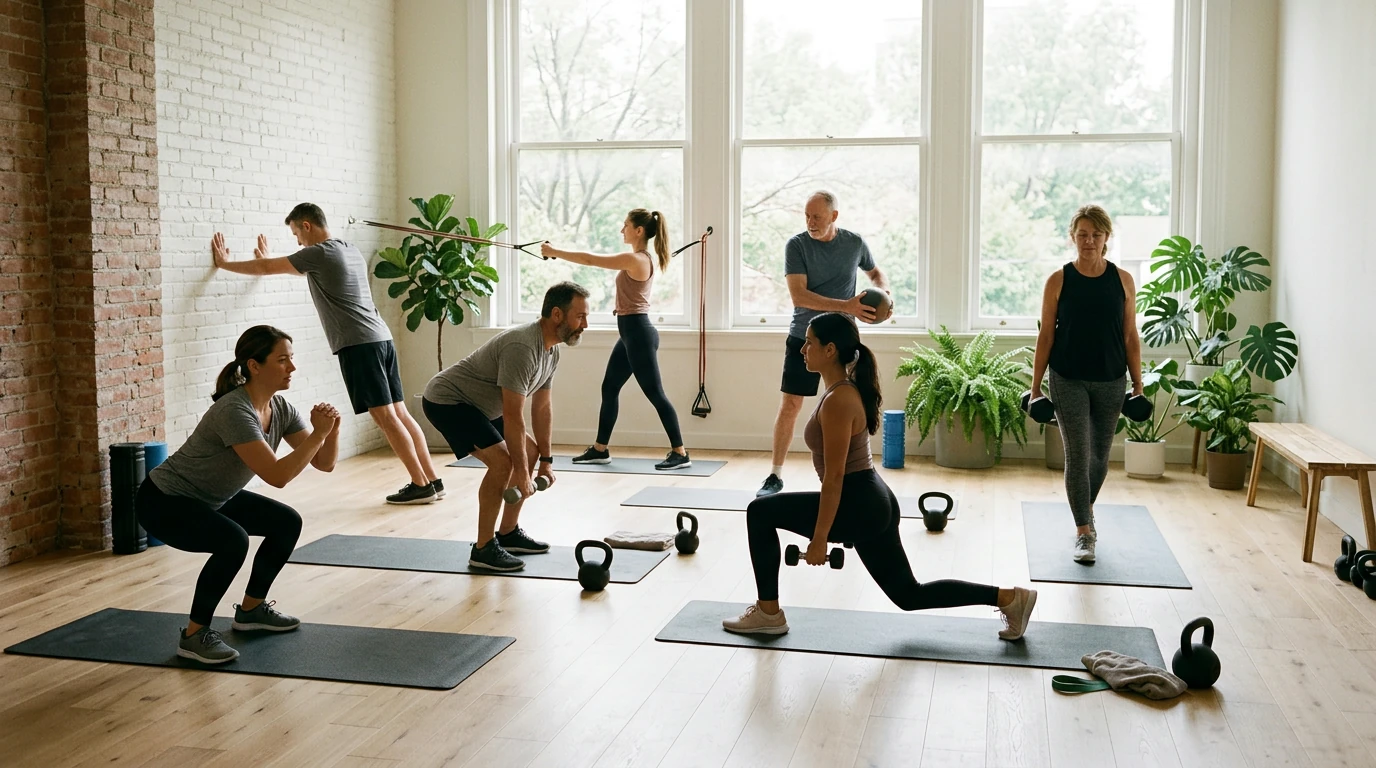
The seven basic functional movements are the squat, hinge, lunge, push, pull, rotate, and carry. Together, they describe common ways you use strength in daily life: sitting down and standing up, picking something up, stepping, moving objects away from or toward you, turning, and transporting a load.
Think of them as movement patterns rather than a required set of seven exercises. A squat might mean standing up from a chair or doing a weighted squat; the pattern stays the same, while the range of motion and resistance can change to suit you.

In a squat, your hips and knees bend together, as they do when you lower yourself into a chair. A hinge emphasizes bending at the hips while keeping your back comfortably aligned, making it useful practice for reaching toward an object on the floor.
A lunge trains you to control your weight with one leg more forward than the other, similar to taking a long step or lowering yourself to kneel. You can begin with a chair squat, an unloaded hip hinge, and a supported split stance before adding depth or resistance.
Featured in this guide
A Practical Guide to Functional Strength Training | Digital eBook Download for Real Life Strength & Mobility Workouts
Pushing moves something away from you, while pulling brings it toward you; everyday examples include opening a heavy door in either direction or moving an object across a counter. A wall push-up and a light band row are approachable ways to practice those patterns without starting on the floor or with heavy weights.
Rotation is the controlled turning of your torso, as when you turn to place something beside you. Start with a comfortable range and let your feet turn when needed, rather than forcing a twist through your lower back while your feet stay planted.
Check the listed dimensions for push, pull, and rotate against the available vehicle space before use.
A carry means walking while holding a load, such as grocery bags, with enough control to stay upright and move steadily. Begin with a manageable weight and a short distance; if you find yourself leaning sharply or holding your breath, lighten the load or stop.
You do not need to train all seven patterns in one workout: choose movements that match what you do now and what you want to do more comfortably. For more ways to connect workouts with daily tasks, read our guide to functional strength training; our team also offers A Practical Guide to Functional Strength Training as a digital eBook download.
Check the listed dimensions for carry puts the patterns to work against the available vehicle space before use.
“Wow, this guide is amazing! It’s practical and easy to understand. I can now do everyday tasks without feeling any strain. My energy levels are through the roof!”
There is no single required list of seven exercises, but you can choose one for each pattern: a chair squat, hip hinge, supported reverse lunge, wall push-up, band row, gentle standing turn, and light carry. Start with movements you can control comfortably, then increase the challenge gradually.




Leave a comment
You must be logged in to post a comment.