Functional strength training builds strength that shows up when it counts: lifting groceries, carrying kids, climbing stairs, getting up from the floor, and moving confidently without feeling “beat up” after workouts. Instead of chasing random exercises, functional training focuses on practical movement patterns, solid positions, and joint-friendly progressions so strength and mobility improve together—at home, while traveling, or in a traditional gym.
If you want a repeatable plan that feels athletic and sustainable, A Practical Guide to Functional Strength Training (Digital eBook Download) is designed to help you train the basics well, progress without guessing, and stay consistent even with a busy schedule.
“Functional” gets overused, but the practical definition is simple: train movements and positions that match what bodies do in daily life and sports.
This guide is built for people who want clear structure without complicated splits or equipment-heavy routines. It emphasizes full-body strength, smarter warm-ups, and mobility that supports the lifts you’re doing—so sessions stay efficient and repeatable.
| Component | Purpose | Examples |
|---|---|---|
| Warm-up & activation | Prepare joints and improve control | Hip openers, glute activation, shoulder CARs |
| Strength patterns | Build usable force and resilience | Squat/hinge/lunge/push/pull/carry |
| Mobility integration | Train range of motion under control | Loaded mobility, tempo work, end-range holds |
| Conditioning (optional) | Support work capacity without burning out | Circuits, short intervals, carries |
| Progression methods | Keep improving without guessing | Reps/sets, load, tempo, density, range |
Consistency beats novelty. A functional plan works best when sessions repeat long enough to practice technique and track progress.
| Day | Focus | Main patterns | Mobility emphasis |
|---|---|---|---|
| Day 1 | Lower body strength | Squat + carry | Ankles/hips; squat depth control |
| Day 2 | Upper body + trunk | Push + pull + anti-rotation | Thoracic/shoulders; ribcage control |
| Day 3 | Full-body athletic | Hinge + lunge + loaded carry | Hamstrings/hips; single-leg balance |
A small set of movements covers most strength needs. The goal is to do them well, progress gradually, and keep joints feeling good.
Mobility is most useful when it’s paired with strength—improve range of motion, then reinforce it under control. Instead of long stretching sessions that don’t stick, short targeted drills (5–10 minutes) tend to create better positions for training and everyday movement.
For a simple training add-on during home sessions or travel days, 3.5mm/Type-C Wired Gaming Earbuds with Mic & Detachable Cable can be an easy way to stay locked in without worrying about charging. If outdoor sessions are part of your routine, Outdoor 3x3m Sunshade Gazebo Awning Parasol for Camping, Waterproof Tarp can help create a consistent shaded space for carries, circuits, and mobility work.
For general activity and strength-training recommendations, see guidance from the World Health Organization, plus resistance training resources from the ACSM and the NSCA.
Yes—when it’s built around simple movement patterns and gradual progressions. Emphasizing technique, manageable effort, and basic mobility helps joints and coordination improve alongside strength.
Most people do well with 2–4 training days per week. Consistency, small progressive overload, and solid recovery habits matter more than cramming in extra sessions.
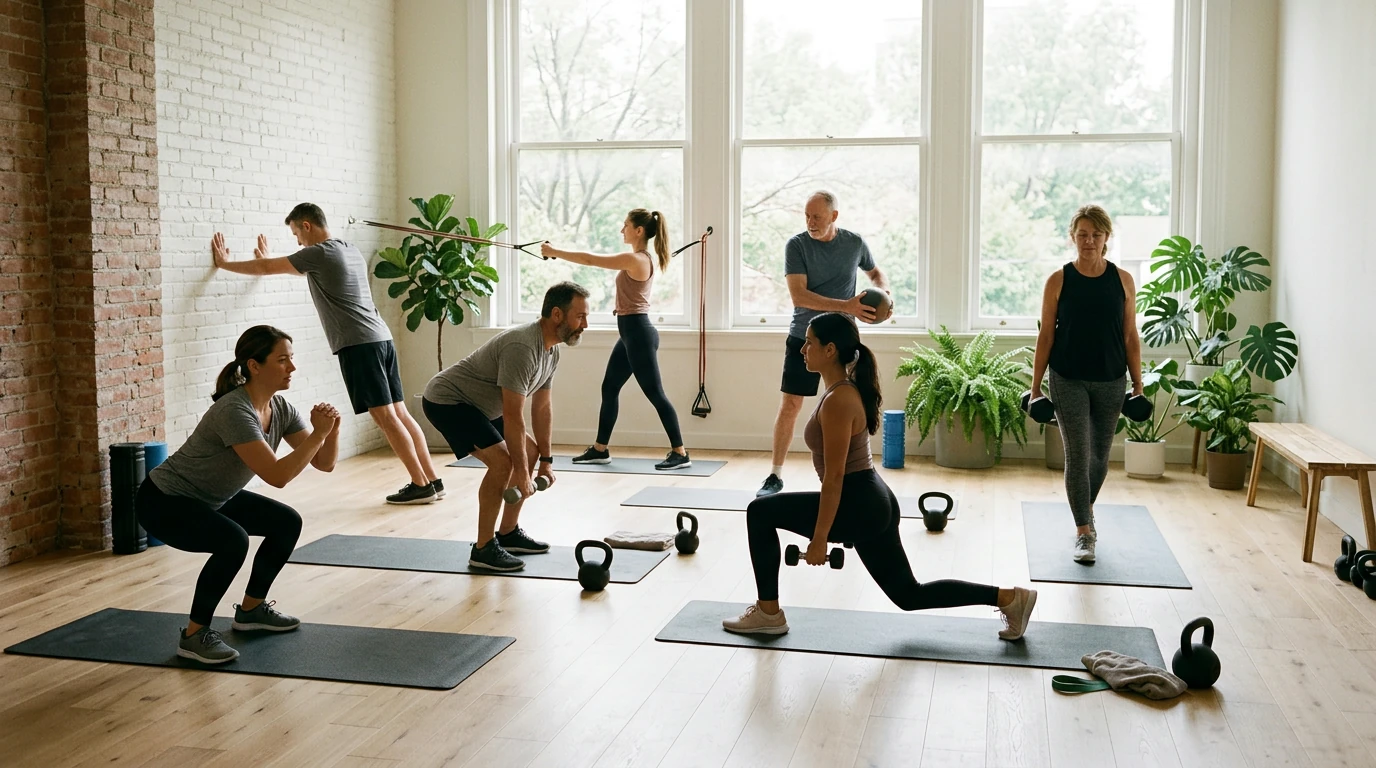
Yes. Many functional patterns can be trained with bodyweight, resistance bands, and a pair of dumbbells or a kettlebell—while keeping the same movement intent (squat, hinge, push, pull, carry) and scaling difficulty over time.




Leave a comment
You must be logged in to post a comment.