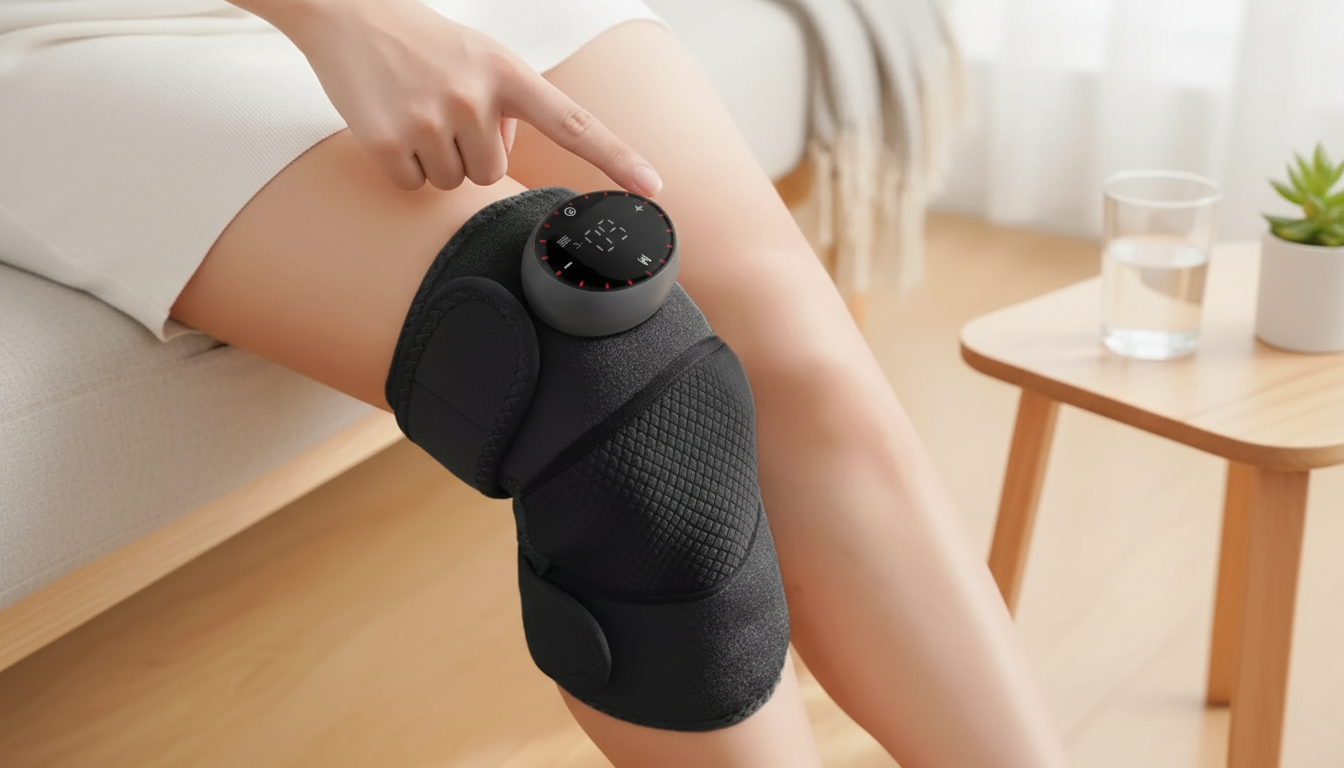
Most people do best with short, consistent sessions: about 10 to 20 minutes at a time, up to 2 or 3 times per day. That window is long enough to loosen tight shoulder muscles and encourage circulation without overheating the skin or irritating sensitive tissue.
If your shoulder pad has both heat and vibration, start conservatively—especially on the first few uses. Try 10 minutes on a low heat setting and a gentle vibration level, then see how your shoulder feels over the next hour. If you feel pleasantly looser (not sore, numb, or “raw”), you can gradually increase toward 15–20 minutes.
Cut your time back (or turn off heat) if you notice skin redness that lingers, tingling, increased pain, or a burning sensation. People with sensitive skin or reduced sensation around the shoulder should stick to the lowest heat and shorter sessions, and avoid falling asleep while wearing the pad.
Some pads include an automatic shutoff around 15–30 minutes for safety. If yours shuts off automatically, that’s usually the manufacturer’s intended maximum session length. You can always do another cycle later, rather than extending one long session.
Heat tends to work best in steady, moderate doses, while vibration can be used more selectively for tight spots. If vibration feels too intense, keep the heat on and reduce vibration level or use it only for the first 5–10 minutes.
For a deeper look at how multi-level heat and vibration sessions are typically structured (and how to adjust intensity safely), see the guide here: https://kymug.shop/guide-5-level-heat-vibration-knee-massager-stiff-knees/.
Use heat for tightness, stiffness, or muscle spasms; use ice for recent strain, swelling, or sharp inflammation. If you’re unsure, start with ice for the first 24–48 hours after an acute flare-up, then switch to heat as stiffness becomes the main issue.




Leave a comment