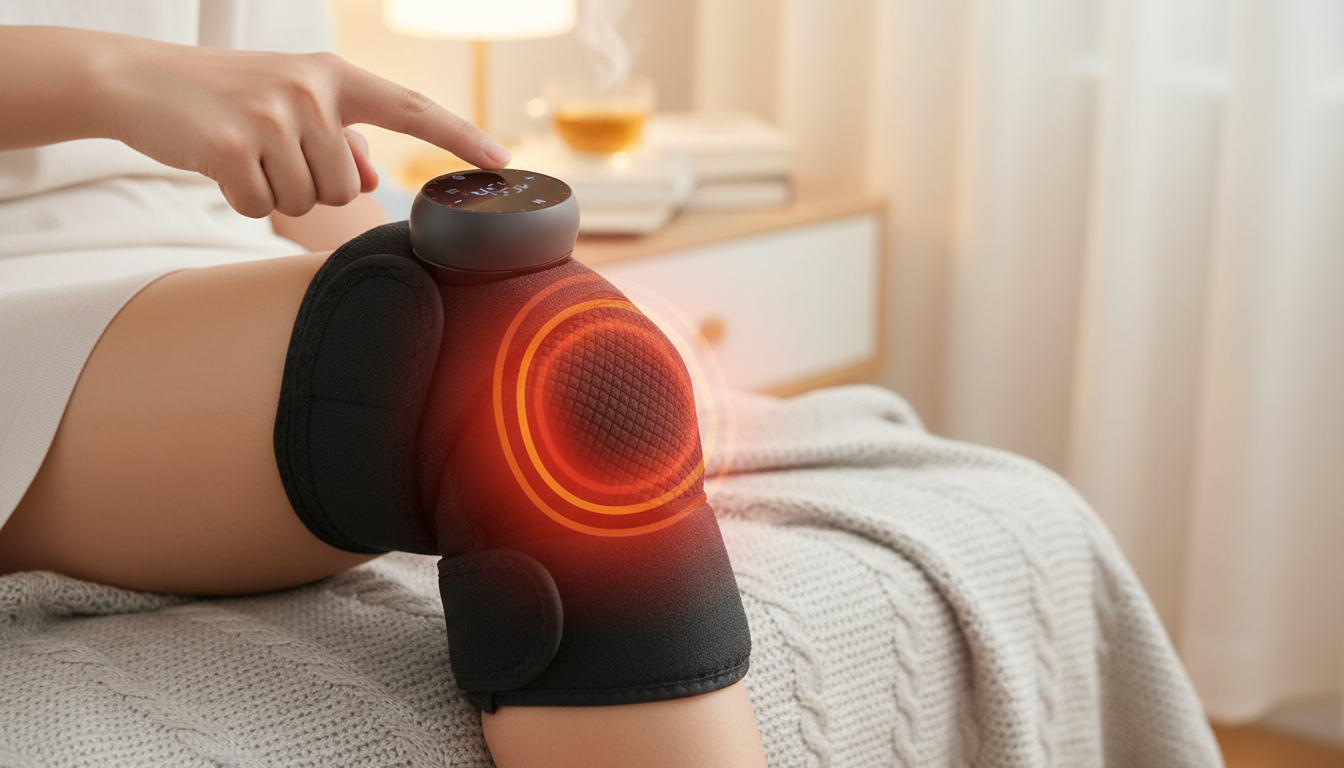
Daily knee discomfort can make stairs, workouts, and even sitting-to-standing feel harder than they should. A heating and vibration knee massager offers a simple at-home way to warm the joint area, encourage relaxation, and ease the “tight” feeling that often comes with overuse, long days on your feet, or cold weather.
Whether your knees feel cranky after a walk or you just want a more comfortable wind-down routine, adjustable heat and vibration can be an easy, low-effort addition to your day—especially when you can choose the intensity that feels right in the moment.
It’s also a practical pick for “in-between” days—when you’re not injured, but you’d like your knees to feel looser and more comfortable before moving around.
Heat therapy is widely used for comfort because warming tissues often helps the area feel less rigid and easier to move. For general guidance on heat and cold, see the Cleveland Clinic overview of heat therapy and the Arthritis Foundation’s heat and cold therapy tips. For broader context on knee discomfort and when it may need evaluation, the Mayo Clinic knee pain resource is a helpful starting point.
| Mode | Best time to use | What it typically feels like |
|---|---|---|
| Heat | Before movement or during cold, stiff days | Loosening and warming around the knee |
| Vibration | After long periods on feet or after workouts | Soothing, calming stimulation |
| Heat + Vibration | When knees feel both stiff and tired | Deep comfort and relaxation |
A good rule of thumb: you’re aiming for “pleasant and relaxing,” not “as hot/strong as possible.” If you notice lingering redness, irritation, or a throbbing sensation that worsens, scale back the intensity or time.
| Goal | Suggested setting | Follow-up step |
|---|---|---|
| Loosen up before moving | Low–medium heat | 2–5 minutes of gentle mobility |
| Soothe after walking/training | Medium heat + vibration | Light stretching or elevation |
| Relax before bed | Low vibration + mild heat | Breathing or calf/hamstring stretch |
If building better movement habits is part of your plan, consider pairing short comfort sessions with a simple strength-and-mobility routine from A Practical Guide to Functional Strength Training (Digital eBook).
Many people get the best results from consistency: a short session before a walk, another after errands, or a low setting while relaxing in the evening. Comfort tools tend to work best when they’re easy to repeat.
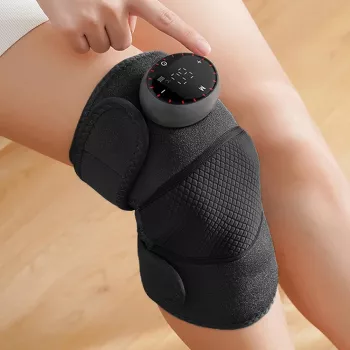
5-Level Heating & Vibration Knee Massager is an easy add-on for recovery days, busy workweeks, or any time your knees feel tight and you want a little extra comfort—without making your routine complicated.
| Item | Details |
|---|---|
| Name | 5-Level Heating & Vibration Knee Massager |
| Price | 25.67 USD |
| Availability | In stock |
| Best for | Comfort, relaxation, stiffness support |
Most people do well with about 10–20 minutes per session. Start with a shorter, lower-intensity session and increase gradually if it feels comfortable; stop if you notice irritation, numbness, or pain.
Heat is commonly used for stiffness or a “tight” feeling, while ice is often used for recent swelling or a flare-up after activity. If discomfort is ongoing or you’re unsure which is best for your situation, a clinician can provide guidance.
Yes—many people use heat and vibration after training to relax and unwind. Use moderate settings once your skin is back to normal temperature, pair it with gentle mobility, and avoid use if there’s an acute injury or significant swelling.


Leave a comment
You must be logged in to post a comment.