Quick signs your cat may be stressed
Cats rarely announce stress in obvious ways. More often, it shows up as small changes that seem “off” for a few days—then snowball into bigger behavior or health issues. Use this short list to spot early signals and act sooner.
- Behavior shifts: hiding more than usual, startling easily, sudden clinginess, nighttime restlessness, or pacing.
- Litter box red flags: avoiding the box, urinating outside it, or frequent attempts with little output. If your cat is straining, contact a veterinarian urgently.
- Body language: flattened ears, dilated pupils, low posture, tail tucked, overgrooming, or noticeable dandruff.
- Appetite and routine changes: eating less, “scarf-and-barf,” drinking changes, or reduced interest in play.
- Aggression or tension: swatting, growling, conflict with other pets, guarding doorways, or blocking access to resources.
The 5-minute stress scan (daily mini-checklist)
This quick scan works best when done at roughly the same time each day. The goal is consistency: notice patterns, connect them to triggers, and keep only the strategies that truly help.
- Observe from a distance first: posture, resting breathing rate, and willingness to approach.
- Check resources: a clean litter box, fresh water, and food access without another pet “policing” it.
- Scan the environment: loud noises, visitors, construction sounds, new smells, or blocked resting spots.
- Do a quick interaction test: offer a treat or wand toy and note interest level.
- Log one sentence: “Today’s biggest change was ___; stress signs were ___.”
Daily mini-checklist tracker
| Day |
Biggest change or trigger |
Stress signs (0–3) |
What was tried |
Result |
| Mon |
Doorbell/guests |
2 |
Quiet room + treat scatter |
Settled in 15 min |
| Tue |
Vacuum |
3 |
Pre-vacuum play + closed door |
Still tense; hid |
| Wed |
No changes |
0 |
Normal routine |
Relaxed |
Common triggers and fast ways to lower the intensity
Stress relief often starts by turning the volume down on the trigger—literally or figuratively—so your cat can return to baseline.
- Noise and activity: set up a “safe room” with bedding, water, litter, and a covered hide. White noise can help soften sudden sounds.
- Schedule changes: keep feeding and play windows consistent. If you’ll be away, use puzzle feeders to create a predictable, rewarding activity.
- New people: let your cat choose distance. Ask visitors to ignore the cat and toss treats away from their body so the cat isn’t pressured to approach.
- Multi-cat tension: add vertical spaces, separate key resources, and reduce hallway bottlenecks where one cat can “control traffic.”
- Scent stress: skip harsh cleaners and strong fragrances. During transitions, keep familiar bedding available and rotate new items slowly.
Calm-home setup checklist (environment, resources, routine)
Many stress flare-ups are really “resource problems” in disguise. A calm setup makes it easier for cats to feel safe without needing to hide, guard, or compete.
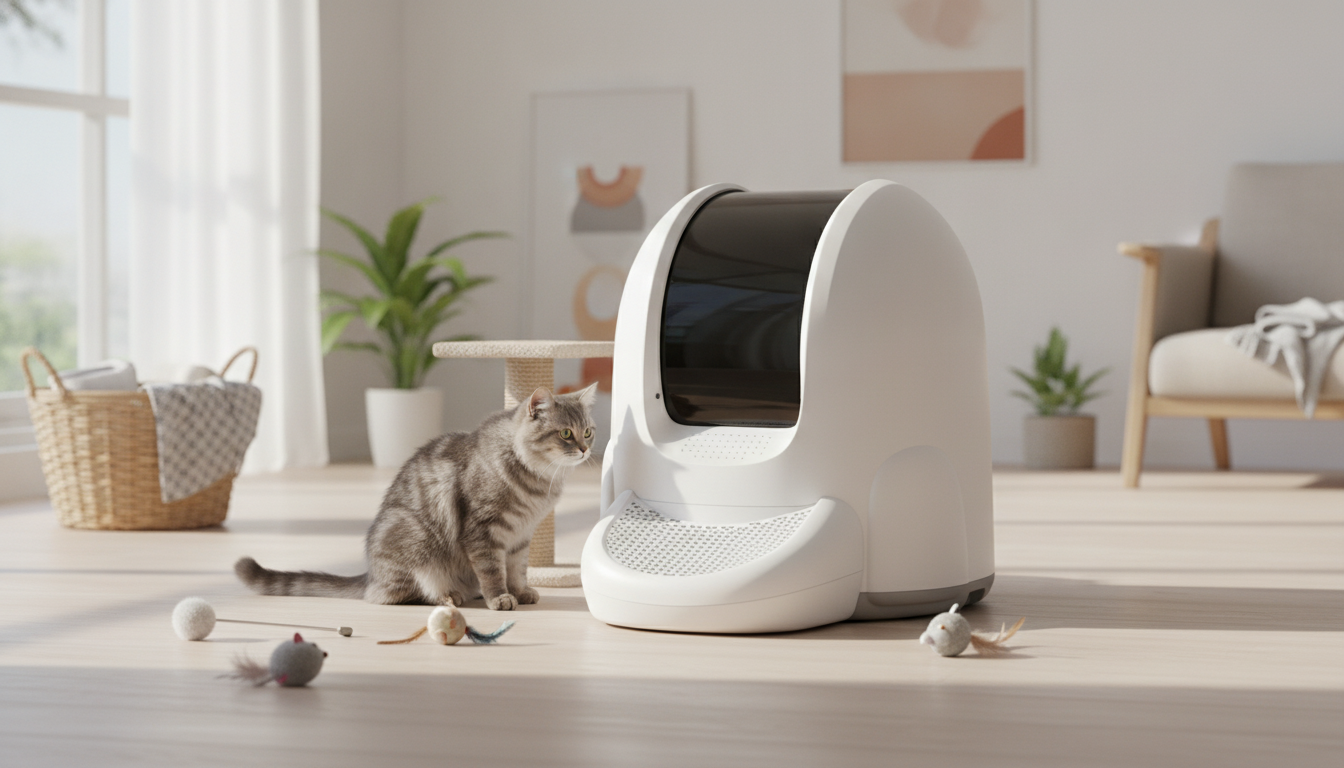
- Litter box setup: enough boxes (often one per cat plus one extra), easy access, quiet locations, scooped daily.
- Vertical territory: cat trees, shelves, or window perches—especially important in multi-pet homes.
- Hiding and resting zones: at least one covered hide per cat plus soft bedding in low-traffic areas.
- Enrichment: rotate toys, offer vertical and horizontal scratchers, and include safe chewing/licking options.
- Predictable routine: short play sessions (5–10 minutes) 1–3x/day; end with a small meal or treat to complete the hunt cycle.
Calming tools that fit into real life
Stress relief doesn’t have to mean an elaborate routine. Pick one or two tools that match your schedule, then build on what your cat actually responds to.
- Play as stress relief: wand toys encourage chase-and-catch. Stop while your cat is still engaged (before overstimulation) and reward calm resets.
- Food strategy: smaller, more frequent meals can help. Puzzle feeders and treat scatters redirect attention away from triggers and create “busy time.”
- Touch and handling: let your cat initiate. Keep it brief and watch for skin rippling, tail flicking, or sudden head turns—these often mean “too much.”
- Pheromones and calming aids: feline pheromone diffusers/sprays can be useful as part of a broader plan, not a stand-alone fix.
- Veterinary support: pain, urinary issues, gastrointestinal discomfort, and skin irritation can look like “stress behavior.” Rule out medical causes early.
Printable plan: 7-day reset routine
Digital download checklist: keep it on the fridge, phone, or pet binder
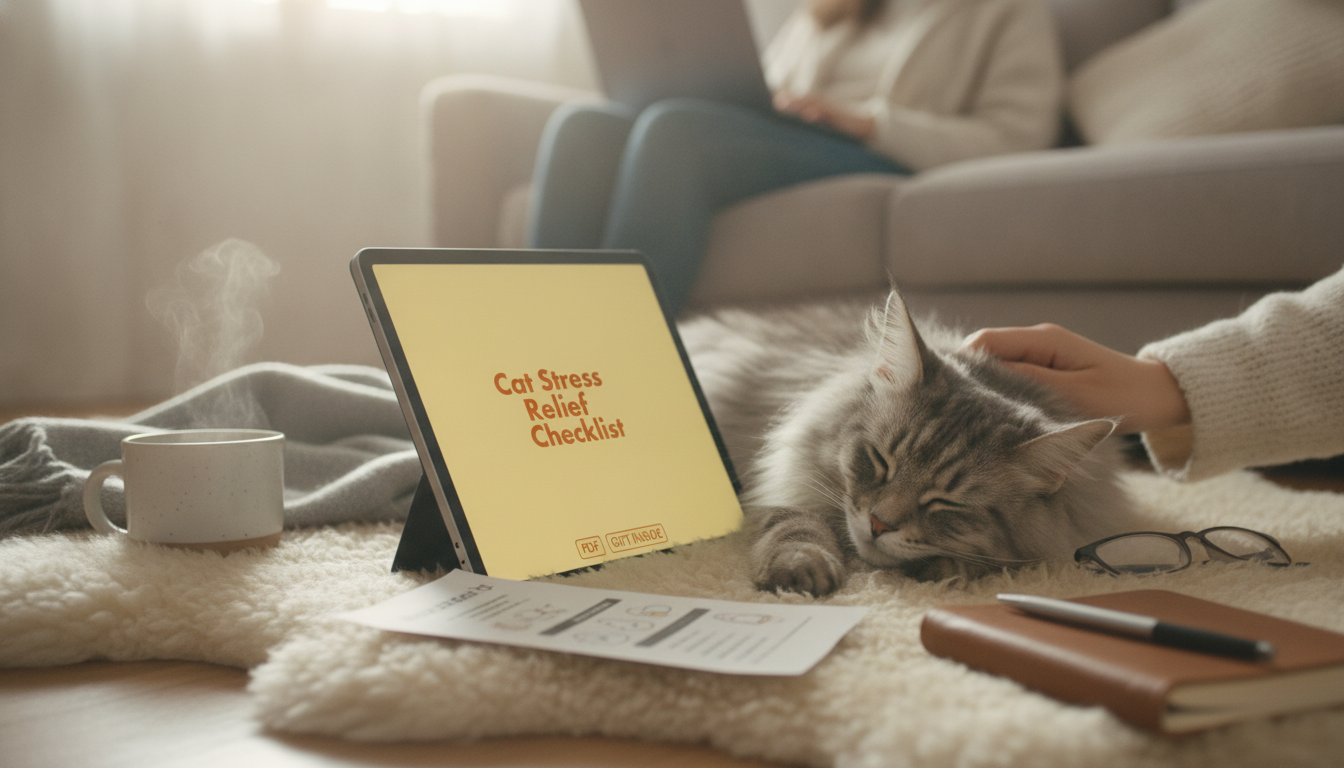
- For a ready-to-use version, see The Ultimate Cat Stress Relief Checklist (digital download).
- Includes a step-by-step stress scan, calm-home setup list, and tracking sheet to spot patterns over time.
- Designed for major transitions (moving, new baby, new pet, travel, renovations) and multi-cat homes where resource separation matters.
- Print-friendly pages plus a fast “cheatsheet” for stress spikes.
Small upgrades that can reduce daily friction
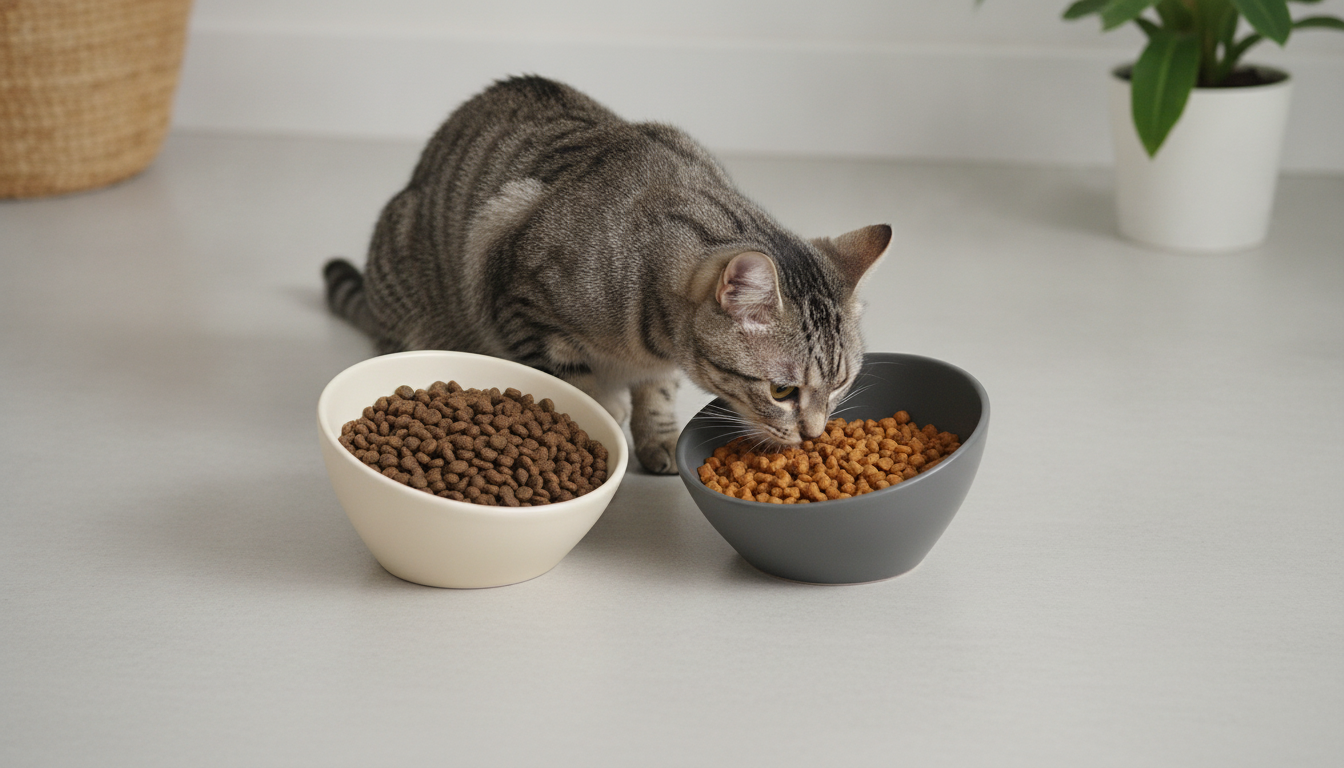
If you’re adjusting your feeding setup, consider the Stress-Free Tilted Cat Food Bowl as a simple, low-effort upgrade.
Further reading from trusted cat-health sources
FAQ
How long does it take for a stressed cat to calm down?
For brief triggers (like a vacuum or doorbell), some cats settle in minutes to a few hours once the environment is quiet again. For bigger changes (moving, new pet, ongoing conflict), improvement often takes days to weeks of consistent routines and trigger tracking; contact your veterinarian if signs persist or worsen.
Should a stressed cat be left alone or comforted?
Offer choice: provide safe spaces, speak softly, and use treats or play to invite interaction without pressure. Avoid forced handling; if you see tail flicking, skin rippling, or sudden head turns, give space and try again later.
When is cat stress an emergency?
Seek veterinary help promptly for straining to urinate, marked lethargy, refusal to eat for more than 24 hours, repeated vomiting, sudden severe aggression, or breathing difficulty. These can indicate urgent medical problems that may look like “stress” at first.
Recommended for you





Leave a comment