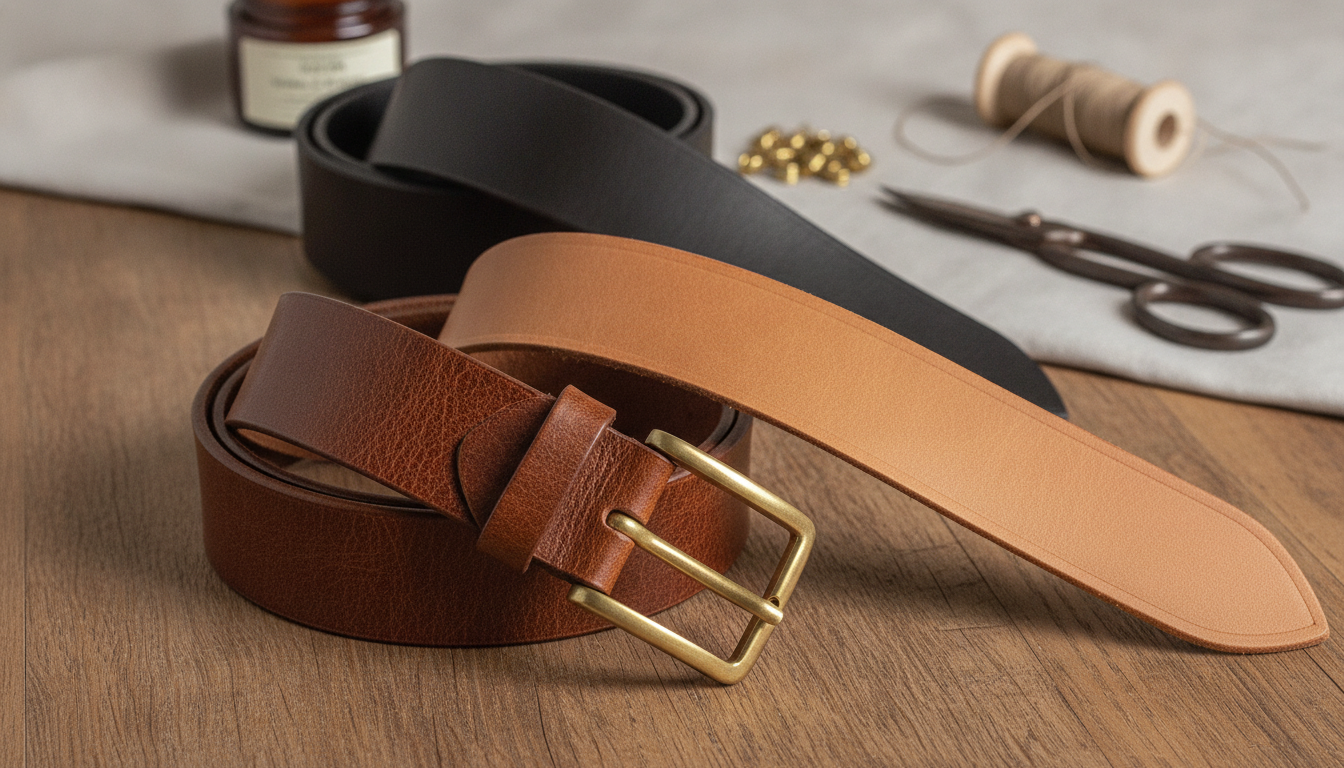
The highest quality leather for belts is typically full-grain leather. It’s cut from the outermost layer of the hide, keeping the natural grain intact, which helps it stay strong, resist stretching, and develop a rich patina over time instead of cracking or peeling.
For shoppers who want the best blend of durability and character, full-grain vegetable-tanned leather is often the top pick. Vegetable tanning uses plant-based tannins and produces a firmer strap that breaks in gradually, holds its shape well, and gains depth in color with wear.
Full-grain leather keeps the hide’s densest fibers, which is why it’s the most resilient option for a belt—an item that flexes daily and carries the stress of buckling. Because it isn’t sanded down to hide marks, it also tends to age more attractively, showing natural variations that make each belt look unique.
Top-grain leather can still be a good choice, but it’s usually buffed and finished to create a more uniform look, which can reduce some long-term durability. “Genuine leather” is a broad label that often refers to lower layers of the hide and may not last as long as full-grain in a belt application. Bonded leather is made from leather scraps and adhesives; it’s the least durable and most prone to splitting.
Beyond the leather grade, pay attention to thickness (often around 1.25″–1.5″ wide for everyday wear, with substantial thickness), clean edge finishing, tight stitching (if stitched), and sturdy hardware such as a solid brass buckle. For more on materials and details that matter, see the complete guide here: https://kymug.shop/guide-genuine-leather-mens-belt-smooth-brass-buckle/.
Look for full-grain or vegetable-tanned leather, a solid feel with minimal coating, and edges that are cleanly finished. Quality belts also use sturdy hardware and won’t feel spongy or overly glossy like heavily corrected leather.



Leave a comment