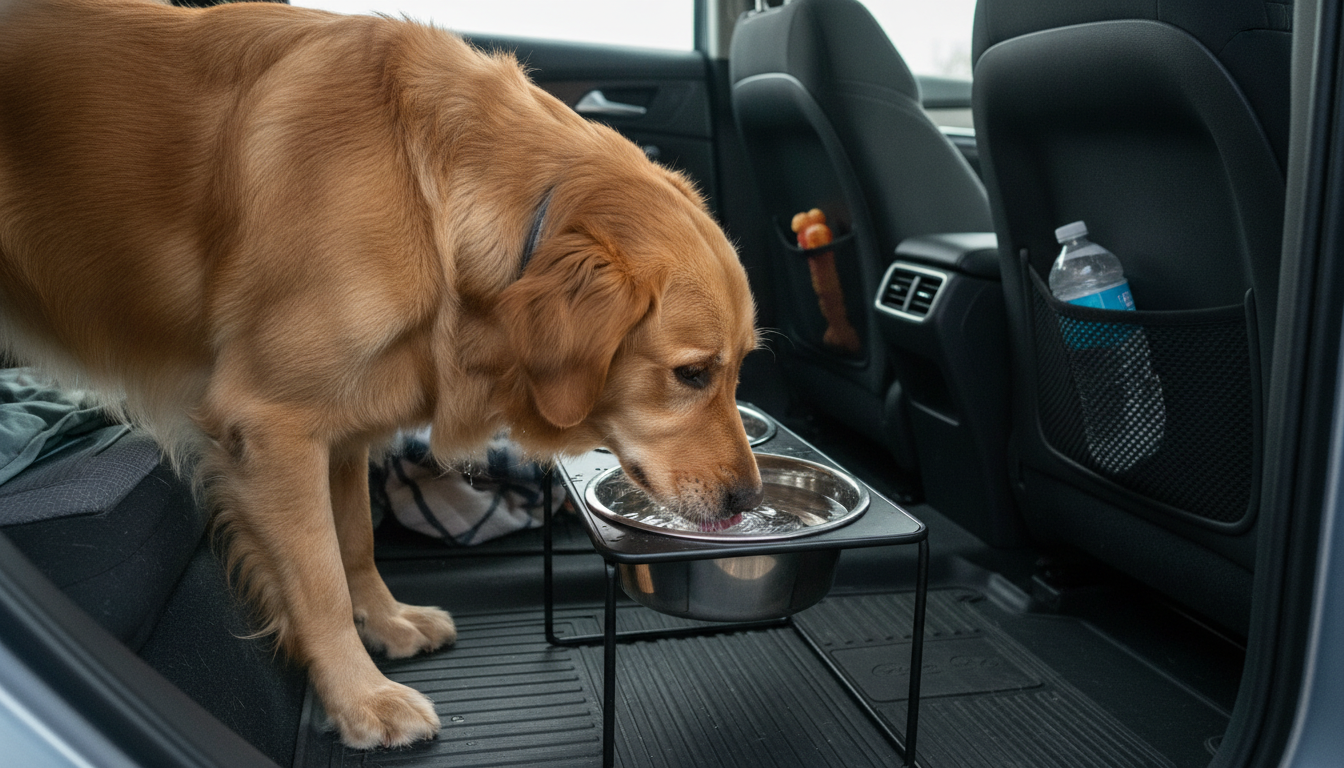
Sometimes, but not automatically. Elevated bowls can make mealtimes more comfortable for certain large dogs, especially those with neck, shoulder, or mobility issues. For other dogs, a raised feeder may offer little benefit—and in some cases can be a poor fit depending on posture, speed of eating, and health history.
A well-sized elevated feeder may reduce the need to bend as far, which can be easier on older large breeds or dogs dealing with arthritis, spinal stiffness, or recovering from injury. It can also help keep the feeding area cleaner by limiting how far food and water travel when a dog eats enthusiastically.
Raised bowls are often most useful when the height is appropriate: the dog should be able to eat with a neutral neck position, without stretching upward or hunching downward. If your dog looks tense, spreads their front legs awkwardly, or seems unsure about the setup, the height may be off.
If your large dog is a fast eater, already gulps air, or has a history of digestive upsets, an elevated bowl isn’t automatically the safest choice. For deep-chested breeds in particular, it’s smart to get individualized guidance from a veterinarian, especially if bloat (GDV) has ever been a concern in your dog or their close relatives.
Also, some dogs simply eat better from the floor. If your dog’s body language looks relaxed at ground level and they’re not straining, there may be no reason to change.
Start by matching the feeder height to your dog’s build, not just their weight. Aim for a stable base that won’t slide, and consider a slow feeder insert if your dog tends to inhale meals. For water, a spill-resistant bowl in a sturdy stand can be helpful for big drinkers.
For a deeper breakdown of pros, cons, and how to pick the right height, visit the main guide on elevated dog bowls.
A good height lets your dog eat with a comfortable, neutral neck position—no reaching up and no deep bending. If you’re unsure, choose an adjustable stand and fine-tune based on posture and comfort.




Leave a comment