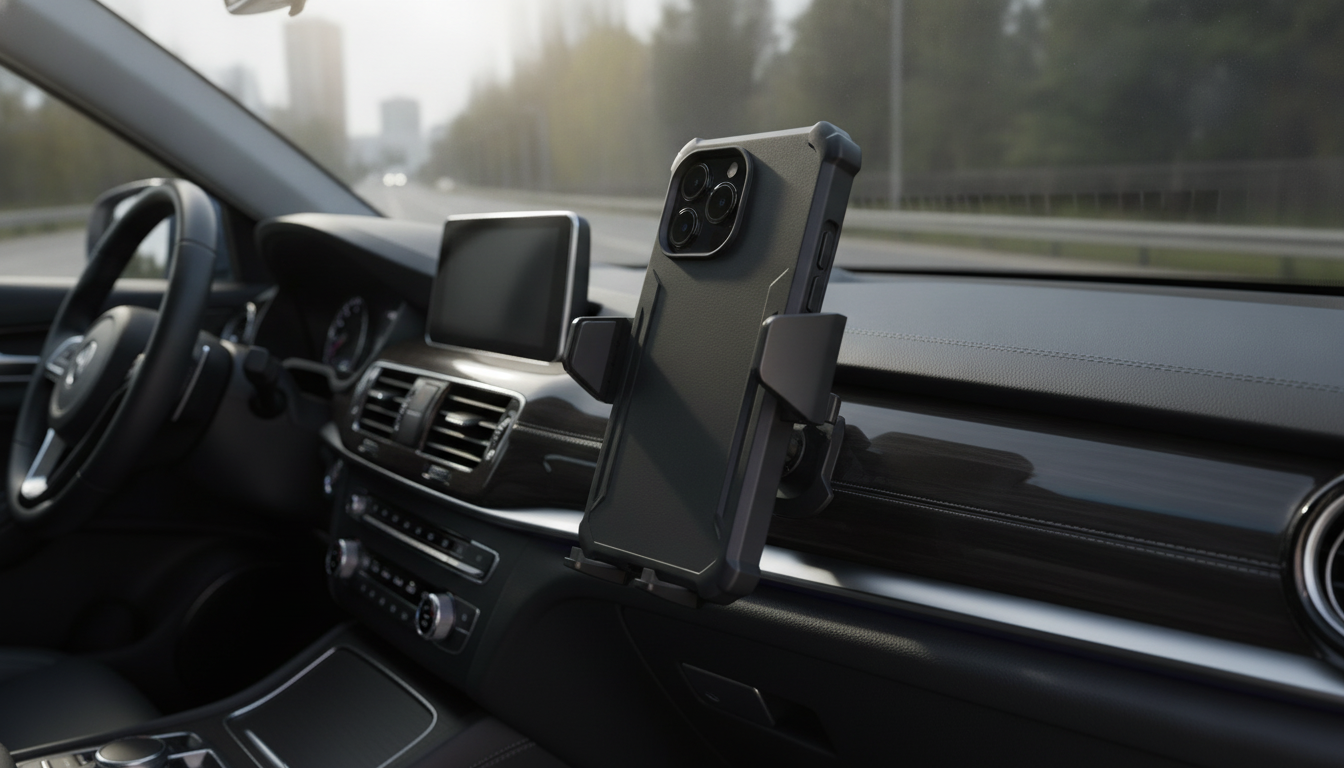
A vent-mounted phone holder has a tough job: keep a big phone steady, stay put over potholes, and still feel simple enough to use with one hand. An upgraded, military-grade style vent mount is built around that real-world driving routine—especially when you’re using a Max/Plus-size phone in a thicker protective case and don’t want a dashboard or windshield setup.
The biggest frustration with many vent mounts isn’t the clip—it’s the fit. If the arms barely close around your phone, or the cradle presses side buttons, you end up re-seating the phone at every stoplight.
| Item to check | Why it matters | What to confirm before buying |
|---|---|---|
| Phone width | Ensures the arms close fully and hold evenly | Clamp range covers your phone model |
| Case thickness | Prevents slipping and avoids over-tightening | Works with rugged or wallet-style cases |
| Button placement | Avoids volume/power presses while mounted | Arms/grips don’t land on side buttons |
| Charging access | Keeps cords from bending or disconnecting | Bottom port remains reachable when clamped |
| Vent type | Determines how firmly the mount can anchor | Compatible with horizontal/vertical vents as needed |
Vent clips can be extremely secure when the vent design cooperates. The trick is choosing a location that supports the holder’s leverage—especially with heavier phones and thicker cases.
A phone holder can be “strong” and still be annoying if it takes two hands, blocks charging, or forces a bad viewing angle. For daily driving, small design choices add up.
Even with a rock-solid mount, safer use comes from how the phone is set up and how often it’s touched while moving. For practical, evidence-based guidance on distraction risks, see NHTSA’s distracted driving resources and the IIHS overview on driver distraction.
There isn’t a single “best” location for every vehicle. The most stable option depends on vent strength, dashboard materials, heat exposure, and how smooth your typical roads are.
| Mount type | Best for | Trade-offs |
|---|---|---|
| Vent | Clean setup, quick repositioning, clear windshield | May affect airflow; stability depends on vent design |
| Dashboard (adhesive) | Strong hold on smooth surfaces, low vibration | Adhesive cleanup; placement is more permanent |
| Windshield (suction) | Higher viewing angle for navigation | Can obstruct view; suction can weaken in heat/cold |
It can, as long as the holder has a strong clamp, non-slip contact pads, and a vent clip that anchors firmly to a sturdy slat. Confirm the clamp range for your phone/case combination and do a quick shake test after installation to verify stability.
Improper placement or over-tightening can stress vent slats over time. Use a stable slat, tighten only until the mount stops rocking, and remove the clip carefully rather than forcing it free.
Place the screen within easy glance range without blocking your view of the road or key instruments. Set navigation before moving and rely on voice controls when possible to minimize hands-on interaction.


Leave a comment