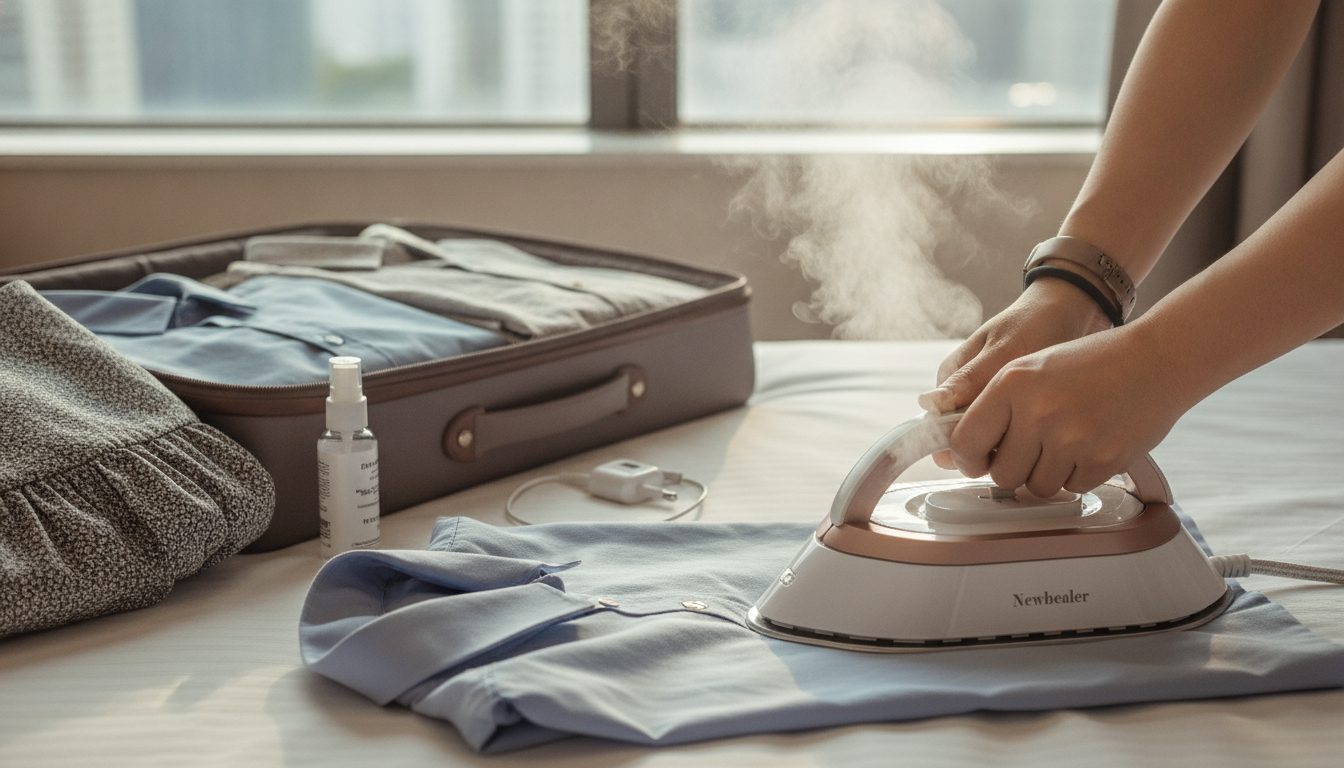
A compact travel iron that also steams can keep shirts, dresses, and lightweight layers looking presentable without hunting for hotel laundry services. This dual-voltage mini iron combines a ceramic panel for smooth glide with a garment-steamer function for quick touch-ups, making it a practical option for carry-ons, business trips, cruises, and dorm life.
When luggage space is tight, the goal isn’t to recreate a full laundry room—it’s to look polished fast. A mini iron with a steamer setting is built for the most common “travel wardrobe” problems: wrinkles from packing cubes, creases from sitting, and light rumpling after unpacking.
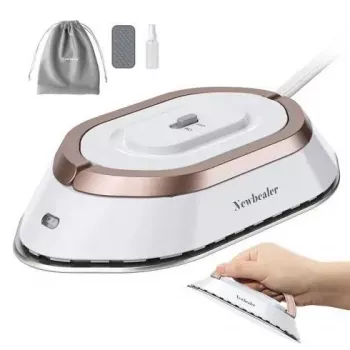
If you want a dedicated, travel-ready option, see the Compact Dual-Voltage Mini Travel Iron with Ceramic Panel & Garment Steamer.
Not all compact irons behave the same. For travel, the most useful features are the ones that reduce risk (wrong voltage, scorched fabric) and speed up touch-ups (fast passes, easy handling, quick steaming).
For fabric safety, pay attention to garment care labels before applying heat or steam. The FTC’s overview of labeling requirements is a helpful reference: FTC — Care Labeling Rule. For international electrical standards context, see: International Electrotechnical Commission (IEC).
Pressing and steaming do different jobs. Pressing reshapes fibers with heat and light pressure for crisp edges; steaming relaxes fibers with moisture so wrinkles release without flattening texture.
| Situation | Best approach | Tip |
|---|---|---|
| Collars, cuffs, sharp creases | Press | Use short passes and avoid lingering in one spot |
| Light wrinkles on hanging garments | Steam | Keep the head moving to prevent damp spots |
| Packed linen/cotton with deep folds | Steam then press | Let fabric warm up, then smooth with the ceramic panel |
| Delicates (silk-like, embellished pieces) | Steam | Test on an inside seam first and keep distance |
Small appliances are easy to use, but travel adds a few extra variables. The best results come from a quick routine: check voltage, start low, keep the tool moving, and let the fabric finish drying before wearing.
For a cleaner finish on dress shirts, lightly stretch the fabric with your free hand while steaming, then press just the high-visibility areas (collar, placket, cuffs). That approach saves time and reduces the chance of heat marks.
A mini iron + steamer shines on the kinds of items people actually pack: lightweight cotton, blends, and travel-friendly synthetics. It’s also useful in small living spaces where a full ironing board and standard iron feel like overkill.
To streamline packing for trips that involve early mornings and time changes, pair a wrinkle-fixer with simple organization tools like the 7 Day Pill Organizer Box. For long flights or chilly hotel rooms, a cozy layer such as the Sofa Knit Throw Blanket with Tassels can make downtime more comfortable without complicated care.
| Detail | Value |
|---|---|
| Item | Compact Dual-Voltage Mini Travel Iron with Ceramic Panel & Garment Steamer |
| Price | 46.51 USD |
| Stock status | In stock |
| Primary functions | Pressing + garment steaming |
| Soleplate/panel | Ceramic panel |
| Travel-ready feature | Dual-voltage support |
Dual voltage typically supports common voltage ranges, but you still need to set the correct voltage for your destination and use the right plug adapter for the outlet shape. In some places, outlet limits or bathroom-only shaver sockets may not support higher-wattage appliances.
Steaming is often gentler because there’s less direct contact, but heat, distance, and time still matter. Follow care labels and test on an inside seam first, keeping the steamer moving to avoid damp or heat spots.
It’s optimized for travel and quick touch-ups, so it can handle small loads and spot-fixing between laundry days. For frequent, large batches or heavier fabrics, a full-size iron is usually faster and more efficient.



Leave a comment