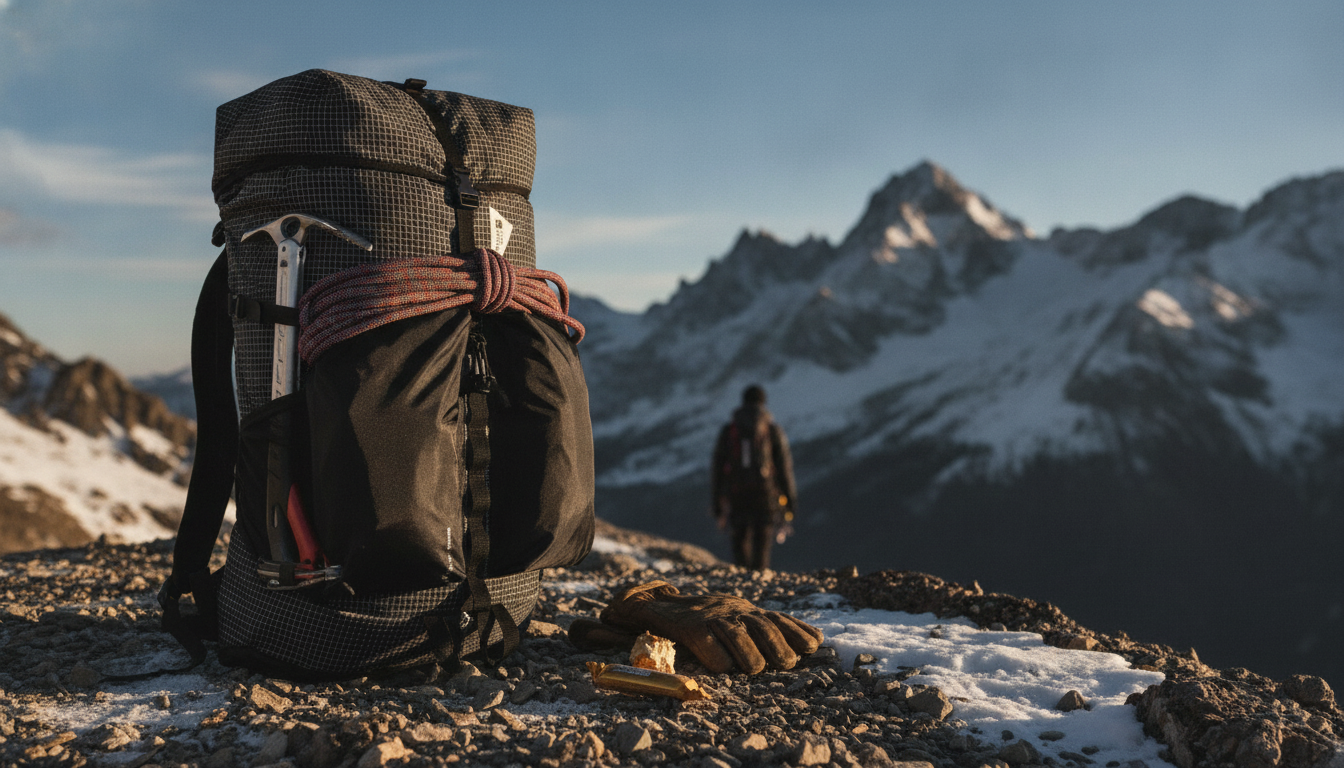
A mountaineering backpack needs to carry heavy loads comfortably, stay stable on steep terrain, and handle snow, rock, and abrasion. The right pack feels like an extension of your body: it moves with you while chimneying, stays tight when you’re front-pointing, and keeps sharp tools from chewing up fabric. Below are the features that matter most on technical routes, how to dial in fit, and how to pack so weight rides close and controlled when the terrain gets serious. For more guidance, see Well-balanced backpack – General Discussion.
Mountaineering packs prioritize stability, durability, and clean external carry over lots of pockets and travel-style organization. A supportive frame or stiff framesheet helps the load ride upright, while effective load lifters and a hipbelt that doesn’t slip keep weight off your shoulders during long approaches. On steep ground, a streamlined, narrow shape reduces snagging when scrambling, wearing a helmet, or moving through rock constrictions. For further reading, see Gregory Makalu Pro packed for traditional alpine ….
Hardware matters more than most people expect. Buckles, drawcords, and zippers should be operable with cold hands or gloves, and they should keep working when temperatures drop. Fabrics should be abrasion-resistant, with reinforced zones where crampons or tools are likely to rub. While no pack is fully weatherproof, treated fabrics and smart lid/flap design help shed spindrift; in wet snow or rain, a pack cover can still be useful.
| Feature | Why it helps | Best for |
|---|---|---|
| Ice tool attachments | Secures tools without swinging or snagging | Snow climbs, glacier travel, mixed routes |
| Rope carry (top strap or under lid) | Moves bulky rope outside while staying balanced | Alpine routes, multi-pitch approaches |
| Crampon lash points / reinforced panel | Reduces risk of fabric punctures | Winter ascents, shoulder-season ice |
| Removable lid / modular parts | Drops weight for summit pushes | Fast-and-light summit days |
| Side compression straps | Stabilizes partial loads and improves balance | Any day with variable gear volume |
Capacity isn’t just about liters—it’s about how well a pack carries when it’s not full and how cleanly it carries gear outside. For day climbs and single-push objectives in mild conditions with compact gear, 20–35L is common. If the day involves big temperature swings, a long approach, or more technical kit, 30–45L often hits the sweet spot for organization and external carry without turning into an overstuffed tower.
For overnights, winter objectives, or any trip with bulky insulation, 45–65L is typical depending on your shelter system and how much group gear you’re sharing. Winter volume climbs quickly: extra food, thicker gloves, and additional layers add up fast. When deciding between sizes, a slightly larger pack can work well if the compression system truly locks down a partial load. A too-small pack can force awkward external strapping that shifts weight away from your center and increases snag risk.
Torso length matters more than overall height. Correct torso sizing keeps the hipbelt centered on your iliac crest so the pack transfers weight efficiently. A good hipbelt wraps without gaps and stays put during high steps and sidehills. For technical climbs, minimal hipbelt padding can actually be an advantage because it plays nicer with a harness and avoids bulky interference.
For cold-weather risk basics, the National Park Service has a clear overview of hypothermia signs and prevention: https://www.nps.gov/articles/hypothermia.htm.
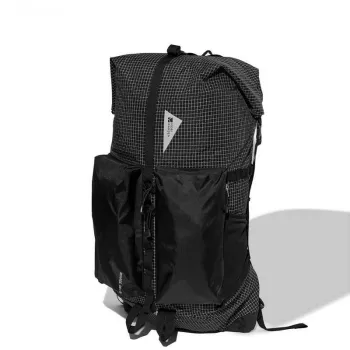
If you’re looking for a dedicated technical pack, the Mountaineering Backpack is built for demanding terrain with room for technical gear and a stable carry for long approaches. It’s best suited for climbers who want a purpose-built pack that can handle variable conditions and external tool carry.
For organization beyond the pack, a small item like a 7 Day Pill Organizer Box can keep essentials (personal meds, electrolyte tabs) sorted for early starts and multi-day plans. And for downtime at a hut or basecamp, a Sofa Knit Throw Blanket with Tassels can add a bit of warmth and comfort when you’re off the route.
Most full-day alpine climbs land in the 30–45L range, balancing space for layers, food, and technical equipment without feeling bulky. Winter layers, more water/thermos capacity, and extra safety gear can push you toward the upper end, so prioritize strong compression and stable carry over sheer volume.
The hipbelt should sit on the iliac crest without sliding, but it should also stay out of the way of harness gear loops and belay devices. Slimmer hipbelts and fewer bulky pockets help; always test high steps, bending, and looking up while wearing your harness to confirm nothing binds or shifts.
Ice tools should ride on dedicated attachment points with picks secured so they can’t snag or swing. Crampons are safest in a crampon pouch or on a reinforced exterior panel with point protection, keeping sharp edges away from the fabric and especially away from the back panel for comfort and puncture prevention.





Leave a comment