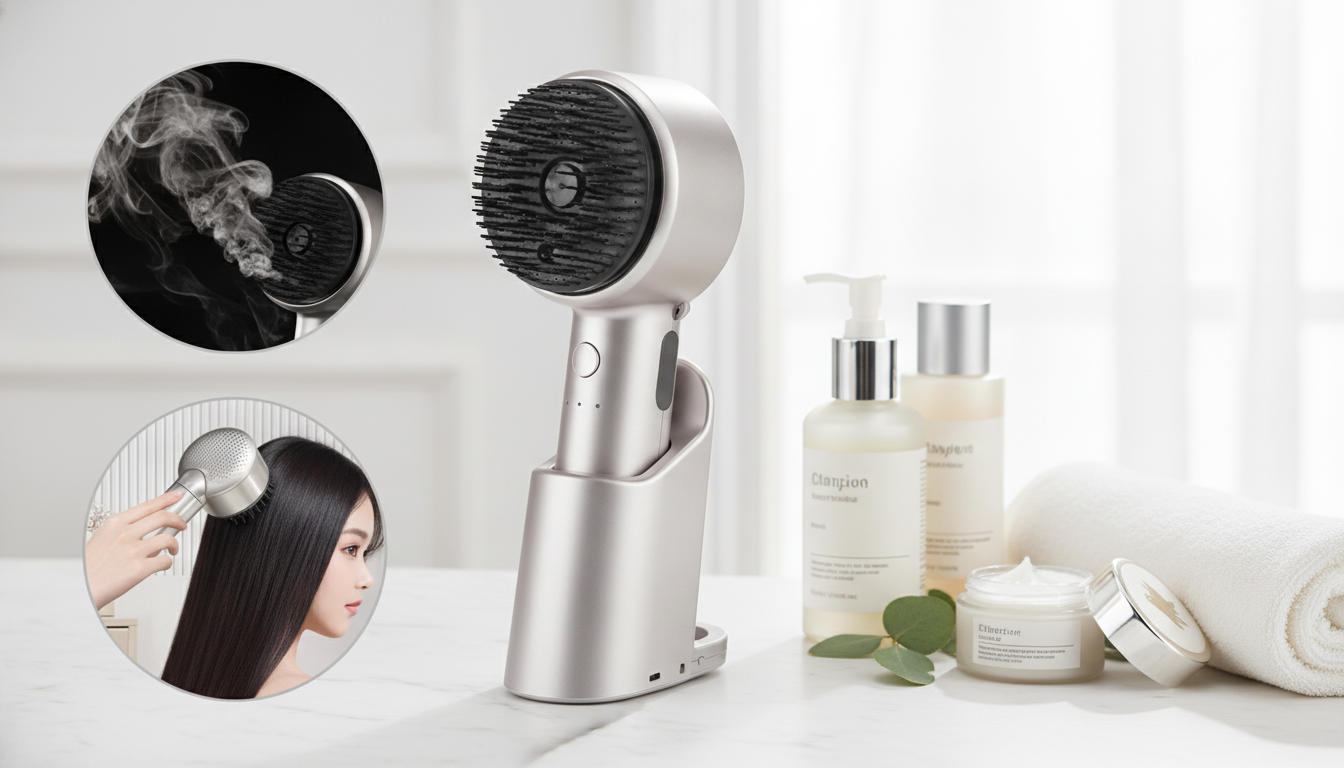
An electric scalp massager that also applies hair oil can turn a messy routine into a consistent, targeted scalp treatment. By combining controlled dispensing with gentle massage, it supports even distribution at the roots while helping oil work through the scalp without heavy buildup on the lengths. For anyone who’s tired of oily fingers, dripping part lines, or uneven coverage, a combined applicator-and-massager tool can make scalp care feel simpler and more repeatable.
What an Electric Scalp Massager & Oil Applicator Does
Traditional oiling often saturates hair strands before it ever reaches the scalp. A combined tool aims to keep product where it’s meant to go: at the roots and on the scalp surface.
- Delivers oil directly to the scalp instead of saturating hair strands.
- Pairs application with massage to help spread product and loosen residue at the roots.
- Helps reduce dripping, greasy hands, and uneven placement along part lines.
- Fits common scalp-care routines: pre-wash oiling, targeted scalp serums, and post-wash scalp treatments (when suitable for the product used).
Who It’s Best For (and When to Skip It)
Scalp tools are most helpful when they match the problem you’re trying to solve—comfort, dryness, and coverage—rather than trying to “over-oil” a persistent issue.
- Helpful for dry, tight-feeling scalps that benefit from regular oiling or scalp serums.
- Useful for thick hair, protective styles, or anyone who struggles to reach the scalp evenly.
- Good for routine-minded users who want consistent application amounts.
- Skip use on broken skin, inflamed scalp conditions, or painful tenderness unless cleared by a clinician.
- If dandruff, itching, or flakes persist, prioritize diagnosis and an evidence-based scalp treatment over adding more oil. For basics on dandruff care, see the Cleveland Clinic overview of dandruff.
If shedding or thinning is a concern, it’s also worth reviewing practical hair-loss management guidance from the American Academy of Dermatology Association.
Key Features That Matter Before Buying
Not every scalp applicator is equally comfortable or easy to keep clean. A few design details tend to make the difference between “used once” and “used weekly.”
- Applicator tip design: should allow precise part-line placement without scratching.
- Massage nodes/material: softer tips tend to be gentler; firmer tips may feel more stimulating but can irritate sensitive scalps.
- Oil reservoir capacity and visibility: easy to fill, easy to see remaining product, minimal leakage risk.
- Cleaning approach: fewer crevices, removable parts, and rinse-friendly pathways make upkeep simpler.
- Power and controls: comfortable grip, easy on/off, and intensity that feels soothing rather than abrasive.
How to Use It Without Making Hair Greasy
The goal is scalp coverage—not coating the hair lengths. A smaller amount applied methodically usually feels better and washes out more cleanly.
- Start small: begin with a small amount of oil; add more only if the scalp still feels dry after massaging.
- Work in sections: part hair, apply a short line of oil, then massage for 10–20 seconds before moving to the next section.
- Keep oil at the scalp: avoid pulling excess down the lengths unless the oil is intended for hair shafts.
- For pre-wash oiling: allow a short contact time (often 15–60 minutes) and shampoo thoroughly.
- For leave-on scalp serums: follow the product label and avoid layering heavy oils that can weigh down hair.
If buildup is a recurring issue, spacing out oil days and occasionally using a clarifying wash can help reset the scalp so treatments feel lighter.
Simple Care and Cleaning Routine
Because oil can go rancid and residue can collect around tips, quick cleaning is part of making these tools work long-term.
- Empty or cap the reservoir before storing to reduce leaks and oxidation.
- Rinse applicator surfaces after each use; wipe the body with a damp cloth (avoid soaking electronics).
- Use a mild soap on removable applicator parts when product buildup appears; rinse fully and air-dry.
- Do not share between users without thorough cleaning to reduce cross-contamination.
- Replace or stop using if tips become rough, cracked, or trap residue that won’t wash out.
- Designed to combine targeted oil placement with scalp massage for a tidier routine.
- Useful for consistent scalp coverage and less product waste.
- Best results come from small amounts and section-by-section application.
At-a-Glance Comparison: Traditional Oiling vs. Oil Applicator + Massage
| Routine |
Control at the scalp |
Mess level |
Consistency |
Best for |
| Hands + bottle dropper |
Medium (depends on technique) |
High (drips, oily fingers) |
Variable |
Occasional treatments, simple oils |
| Applicator bottle with comb tip |
High (precise parting) |
Medium |
High |
Protective styles, targeted placement |
| Electric scalp massager + oil applicator |
High (placement + spread) |
Low to medium |
High |
Regular scalp routines and even distribution |
Shop: Electric Scalp Massager & Hair Oil Applicator ($32.51)
A Complementary Option for Scalp Massage
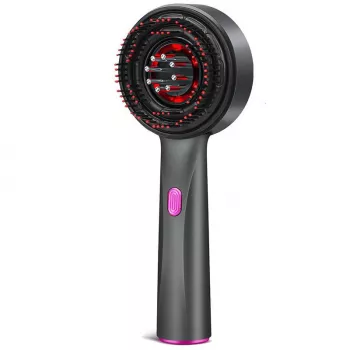
Shop: Electric Massage Hair Growth Comb ($16.82)
FAQ
Can an electric scalp massager help with hair growth?
Scalp massage can improve comfort and may support a healthier scalp environment, but it isn’t a proven standalone treatment for hair loss. If shedding or thinning continues, focus on gentle scalp care and consider clinically supported options with professional guidance.
How often should hair oil be applied to the scalp?
It depends on your scalp type and the product used. Many people do well with 1–3 times per week as a pre-wash step, while oily or buildup-prone scalps may need less to avoid heaviness and flakes.
What oils are safest to use in an applicator?
Choose clean, scalp-safe oils that flow easily and match your sensitivity. If irritation is common, avoid heavily fragranced blends, and keep the reservoir clean so old oil doesn’t create odor or residue.
Recommended for you


Leave a comment