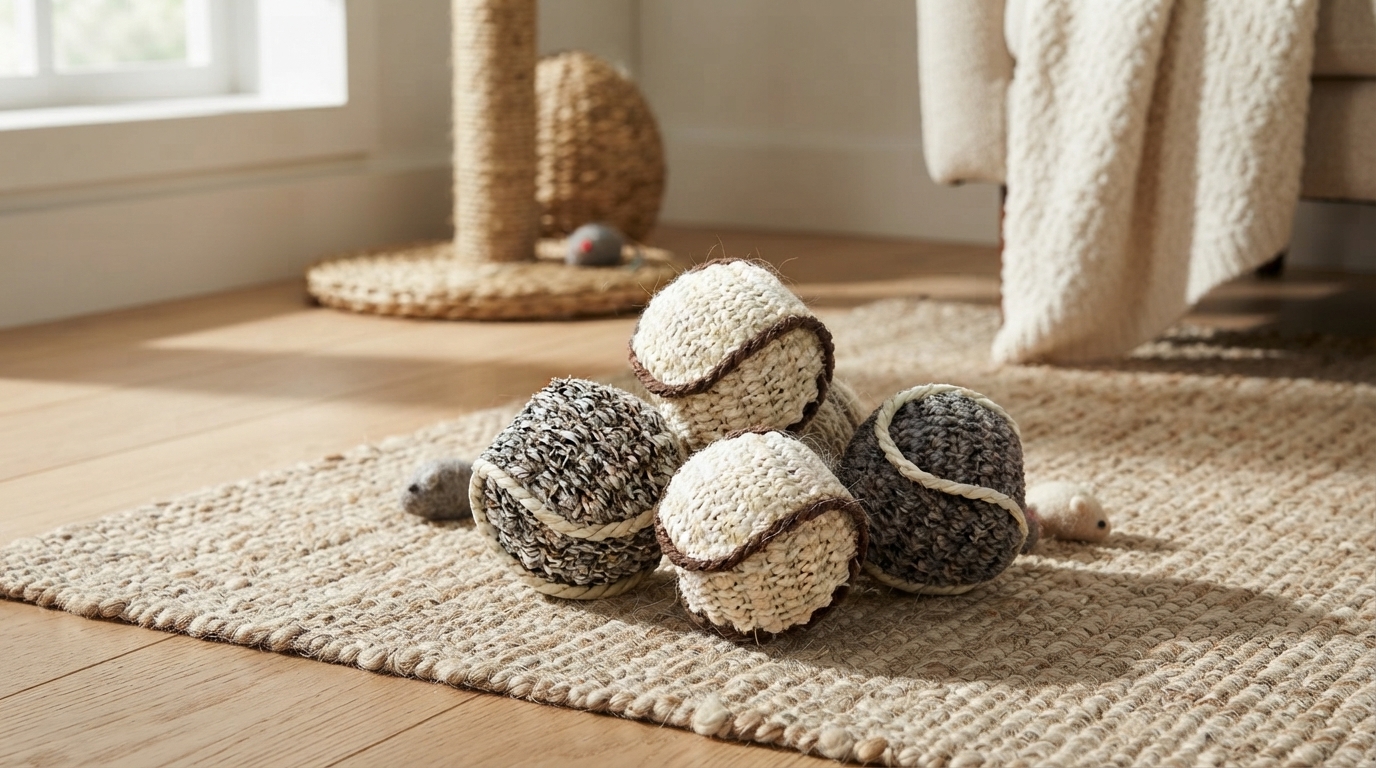
A scratching toy works best when it satisfies two instincts at once: claw maintenance and hunting-style play. An interactive sisal scratching ball adds movement and texture, encouraging regular scratching sessions that can help redirect claws away from rugs and furniture while keeping indoor cats busy. For many households, it’s a simple way to turn “don’t scratch that” moments into an easy, repeatable habit: scratch here instead. For more guidance, see Enrich Your Kitty’s Environment | Happy Cats Haven.
Scratching isn’t “bad behavior”—it’s a normal feline need. When cats don’t have a clear, appealing outlet, they’ll often choose whatever feels best under their paws (sofa arms, carpeted corners, or door frames). For further reading, see Catnip Balls and SmartCat The Ultimate 32-in Sisal Cat Scratching ….
Animal welfare organizations consistently recommend providing appropriate scratching surfaces as part of a cat-friendly home setup. For behavior basics and practical tips, see the ASPCA’s guidance on cat scratching and the Humane Society’s furniture-scratching advice.
Not all scratchers feel the same to a cat. Texture, resistance, and “give” matter. A sisal scratching ball stands out because it blends a high-grip surface with a shape that invites play.
Two scratching balls can look similar online but perform very differently at home. A few details help separate a long-lasting enrichment toy from something that gets ignored—or falls apart quickly.
| Type | Best for | Potential downside |
|---|---|---|
| Interactive sisal scratching ball | Cats that need play + scratch in one toy; boredom relief | May move around more than a fixed post |
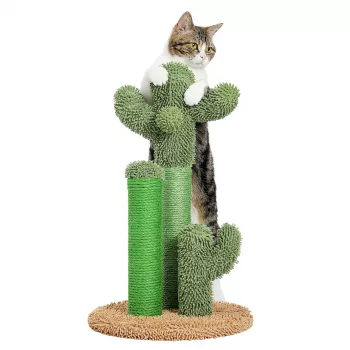
| Vertical scratching post | Full-body stretchers; cats that prefer upright scratching | Takes more floor space; some cats ignore it without training |
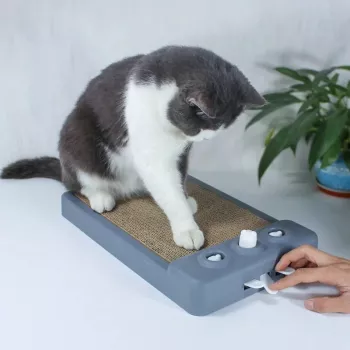
| Cardboard scratch pad | Budget-friendly; cats that like horizontal scratching | Wears down faster; cardboard bits can scatter |
| Sisal mat/pad | Cats that like textured horizontal surfaces; placement flexibility | Can slide unless anchored |
The “best” scratching toy is the one your cat chooses. A short setup routine can make a big difference—especially if your cat has already claimed the sofa.
If scratching is part of a broader stress pattern (new pet, moving, schedule change), improving overall environmental comfort can help. The AAFP’s feline-friendly guidance is a useful reference point for reducing friction in multi-pet or busy households.
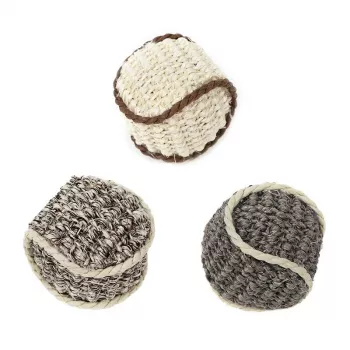
If you’re adding a new scratch option or trying to redirect furniture scratching, the Interactive Sisal Scratching Ball for Cats is a simple, budget-friendly way to combine scratching with batting and chasing. It works especially well as a secondary scratcher alongside a main post—useful for cats that prefer lower, angled, or more playful scratching sessions.
To protect upholstery during the transition period (or in high-traffic lounging spots), consider adding a washable cover like the Sofa Knit Throw Blanket with Tassels to help shield favorite scratch zones while training and redirection take effect.
Many cats like sisal because it’s rough and easy to grip, but preferences vary. Offer sisal alongside another texture (like cardboard or a post) and keep the preferred option near your cat’s usual scratching spot.
Place the scratching ball directly next to the sofa corner, reward use immediately, and temporarily block or cover the favorite scratch area. Consistent redirection works better than punishment.
Generally yes if it has no small detachable parts and feels sturdy. Supervise early sessions, and remove the toy if fibers unravel or if the kitten tries to chew and swallow strands.


Leave a comment