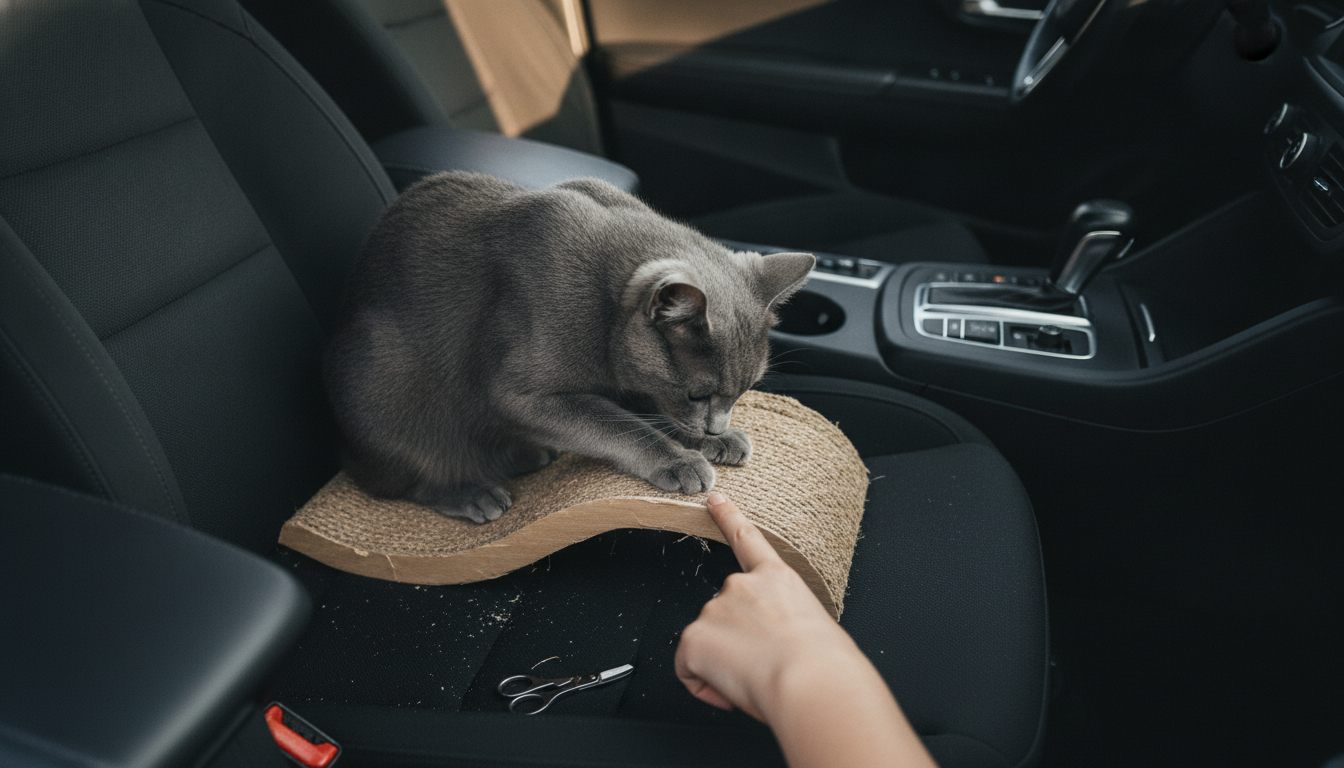
Scratching posts don’t “sharpen” cat nails like a tool that creates a pointier edge. Instead, they help cats shed the outer, worn layer of the claw (the sheath), which can leave the nails feeling cleaner and looking neater afterward. Because that old layer gets pulled off, the newly exposed nail underneath may seem sharper to the touch—but the main effect is healthy maintenance, not sharpening.
A cat’s claw is made of layers, and the outside layer can become frayed, thick, or loose over time. When a cat scratches a post, the friction and pulling action helps peel away that dull, flaky outer sheath. That’s why you may find small “claw caps” around the scratching area.
So do scratching posts dull nails? Not in the way sandpaper dulls a pencil tip. Scratching doesn’t blunt the claw; it conditions it by removing damaged material. If your goal is to reduce how sharp your cat feels on your skin or furniture, regular nail trims are what actually reduce sharpness.
Once the outer sheath comes off, the nail underneath is smoother and sometimes more pointed. That can make a cat’s nails feel sharper right after a good scratching session. This is normal and usually a sign that the claw is cycling as it should.
Offer a sturdy post that won’t wobble and has a texture your cat likes (many prefer sisal). Place it near sleeping spots or in rooms where your cat already scratches. Pair scratching with routine trimming every few weeks to keep the tips comfortably rounded while still letting your cat do their natural nail care.
For a deeper breakdown of what scratching really does to claws and how to manage nail sharpness, visit the full guide on scratching posts and cat nails.
Most cats still benefit from trims about every 2–4 weeks. A scratching post helps shed old layers, but it doesn’t shorten the nail length or dull the tip like trimming does.



Leave a comment