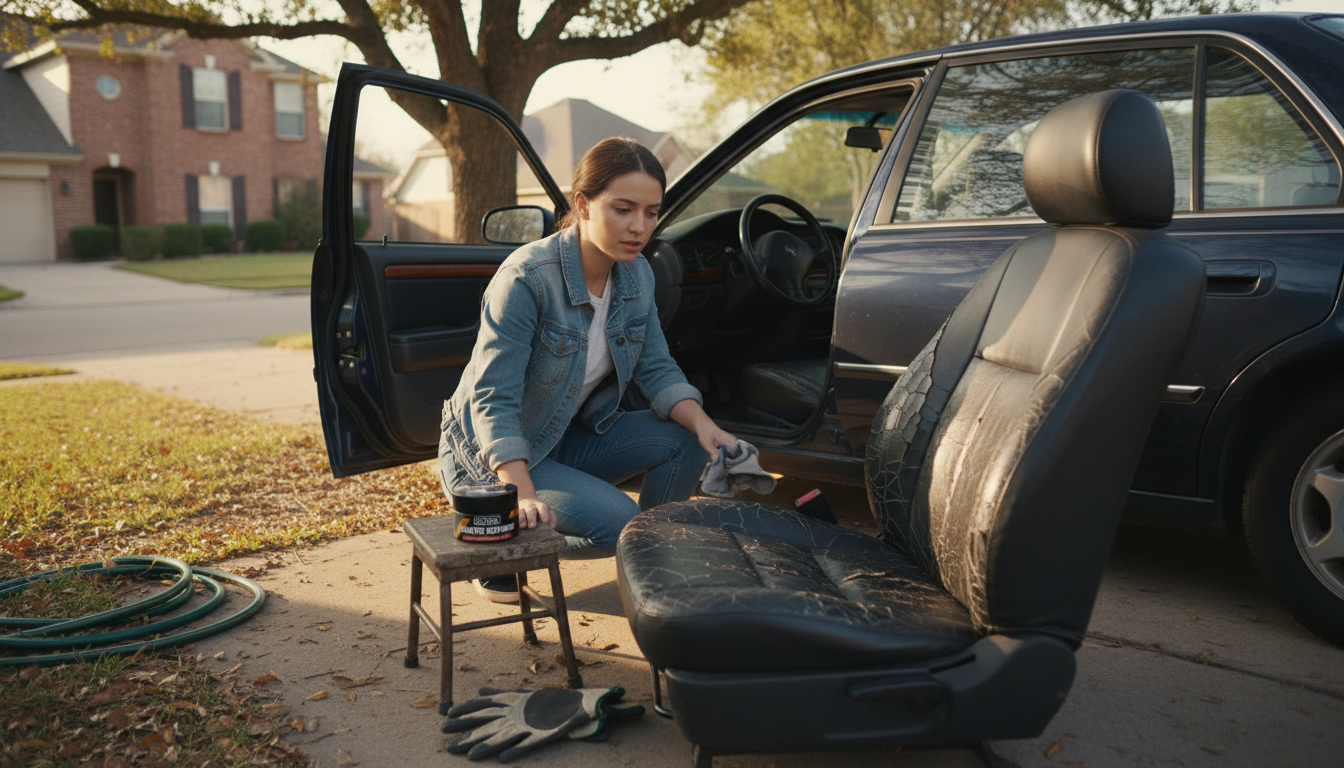
PVC leather (also called vinyl leather or faux leather made with polyvinyl chloride) is popular because it’s inexpensive, uniform-looking, and easy to wipe clean. The tradeoff is that it comes with several drawbacks that can affect comfort, durability, and long-term appearance—especially on high-touch items like car interiors, chairs, bags, and coated upholstery.
PVC leather is essentially a plastic surface, so it doesn’t breathe like natural leather. That can make it feel sticky or sweaty in warm conditions and chilly in cold weather, which is noticeable on seating and wearables.
As PVC ages, it can lose flexibility, particularly with temperature swings, sun exposure, or frequent bending. Once cracking or peeling starts, it’s difficult to make the surface look truly “new” again because the coating itself is breaking down.
Direct sunlight and hot interiors can cause discoloration, surface dulling, and brittleness faster than many people expect. That’s a common issue in cars, where dashboards, trims, and coated leatherette seats take constant UV and heat.
PVC leather can develop shiny patches where friction is constant (seat bolsters, armrests, corners of bags). Scuffs can also show as lighter marks, and heavy abrasion may remove the top layer rather than “patina” like real leather.
PVC production and disposal can be less eco-friendly than some alternative materials. Depending on the formulation, additives used for softness and flexibility may also be a concern for shoppers who prefer lower-chemical materials.
If you’re dealing with faded or dull plastic-coated surfaces and want practical restoration tips, see the full guide here: https://kymug.shop/guide-back-to-black-restorer-car-plastic-coated-leather-gloss/.
Clean the surface thoroughly, then use a restorer designed for plastic-coated leather to bring back color and even out dull, gray areas. Finish by buffing to the desired sheen and avoid over-applying product on high-contact zones.




Leave a comment