Non-woven mulch rings create a tidy, breathable barrier around trees and shrubs that helps suppress weeds, reduce soil splash, and slow evaporation. Reusable designs make seasonal cleanups easier and can cut down how often fresh mulch needs to be replaced—especially in tree circles where grass creeps in and string trimmers do the most damage.
What a non-woven mulch ring does around a tree
A well-fitted mulch ring works like a “quiet zone” for the root area: it discourages weeds while keeping maintenance simple and the trunk safer from lawn equipment.
- Blocks sunlight at the soil surface to slow weed germination while still allowing air and water movement.
- Reduces soil splash onto trunks and lower foliage during heavy rain or irrigation, helping beds look cleaner after storms.
- Helps keep moisture more even by reducing evaporation from bare soil—useful during hot spells and windy days.
- Creates a clear “no-grass zone” so mowers and string trimmers stay farther from bark and surface roots.
Why non-woven fabric matters
Not all weed barriers behave the same once they’re exposed to sun, rain, and shifting soil. Non-woven designs are popular because they balance weed suppression with practical, plant-friendly airflow.
- Breathability: non-woven materials typically allow water to pass through while reducing weed pressure compared with bare soil alone.
- Flexibility: the fabric conforms to slight grade changes and settles flatter, which helps prevent gaps where weeds can pop through.
- Cleaner maintenance: less mulch migration and fewer muddy rings around the trunk after heavy watering.
- Reusable routine: for seasonal refreshes, the ring can be lifted, rinsed, dried, and reinstalled—handy when inspecting trunk flare or top-dressing soil.
For general mulching best practices around trees and shrubs, see guidance from the International Society of Arboriculture and tree-care resources from the University of Maryland Extension.
Where mulch rings help most (and when to skip them)
Mulch rings aren’t only for aesthetics—they can solve specific yard problems when used in the right spots.
Best places to use them
- Newly planted trees: reduces competition from grass and weeds while you establish a consistent watering routine.
- Orchard rows and small fruit trees: keeps bases accessible for inspection and irrigation while lowering weeding time.
- Raised beds with shrubs: helps keep bed edges crisp and reduces soil splash during overhead watering.
- High-traffic lawn edges: minimizes trimming damage where equipment routinely gets too close.
When to skip or adjust
- Chronic waterlogged soil: address drainage first; continually saturated soil can stress roots regardless of ground cover.
- Rodent pressure: inspect more frequently and keep edges snug so pests have fewer hiding spots; remove debris buildup on top.
- Trunk contact: avoid piling material against bark; keep a small gap at the base so the trunk stays dry and visible.
The USDA Forest Service also emphasizes keeping mulch away from direct trunk contact to help reduce decay and pest issues.
Installation in 10 minutes: fit, secure, and mulch correctly
Most performance problems come from shortcuts—especially uneven soil, lifted edges, or fabric touching the trunk. A quick, careful install keeps the ring flat and effective.
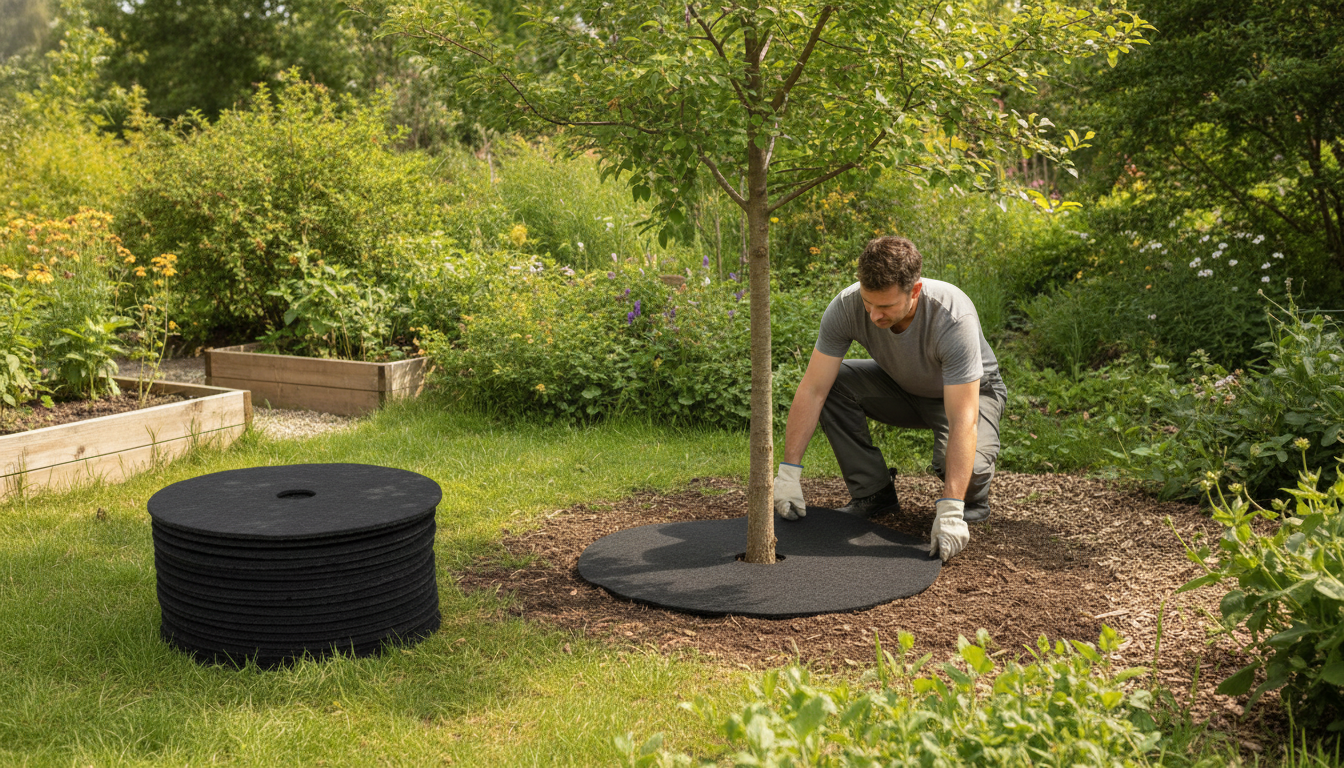
- Clear and level: remove weeds and grass in a circle wider than the ring. Rake the surface level so the ring sits flush.
- Set the trunk gap: place the ring around the trunk while leaving a small gap so no fabric touches bark.
- Pin the perimeter: use landscape pins or staples so wind can’t lift corners. If the ring has a split, overlap the seam slightly.
- Mulch lightly (optional): add a thin, even layer of wood chips on top for a more natural look and extra evaporation control. Avoid “mulch volcanoes.”
- Water and observe: water through the ring and confirm it infiltrates rather than running off. If runoff occurs, re-level the soil and re-pin the edge.
Mulch ring vs. wood chips vs. plastic: quick comparison
Choose the approach that matches your climate, how often you want to refresh beds, and whether you prioritize a natural look or a crisp, low-mess border.
| Option |
Weed control |
Water/air flow |
Maintenance |
Best for |
| Non-woven mulch ring |
High (when pinned flat) |
Good |
Low; reusable |
Clean borders, mower-safe tree circles |
| Wood chips only |
Medium–High (at proper depth) |
Excellent |
Medium; needs replenishing |
Natural look, soil-building over time |
| Plastic sheet |
High |
Low (can trap moisture) |
Medium; can tear and overheat soil |
Short-term weed blocking (use with caution) |
Care tips for reuse: keep it effective season after season
Product options
FAQ
Do mulch rings prevent all weeds?
No—mulch rings greatly reduce weeds when installed flat and pinned, but weeds can still emerge at seams, edges, or through debris that accumulates on top. A quick monthly check and removal keeps the barrier working well.
Should a mulch ring touch the tree trunk?
No. Leave a small gap so the bark stays dry and visible; keeping material off the trunk helps reduce rot risk and makes it easier to spot pests or damage early.
Can mulch rings be used with wood chips?
Yes. Add a light, even layer of chips on top for a more natural finish and extra evaporation control, but avoid heavy buildup against the trunk to maintain airflow and visibility at the base.
Recommended for you





Leave a comment