
44% off on product page · save $42.98
Japanese-Style Ceramic Salt Jars: Countertop Tips
Picture a weeknight meal: vegetables are on the cutting board, something is simmering, and you reach for a pinch of salt. A countertop jar can make that small step easier. Place the pair near your main prep area or cooking station, wherever you can reach them without leaning over a hot burner.
Leave enough room to lift each lid comfortably. A spot away from sink splashes and direct heat is a more practical choice than a crowded corner beside the stove. If you keep utensils, oil, and a cutting board on the same stretch of counter, try arranging them first, then see whether both jars still have a clear, convenient place.
Check the product’s listed specifications when evaluating make space for seasoning where you cook.
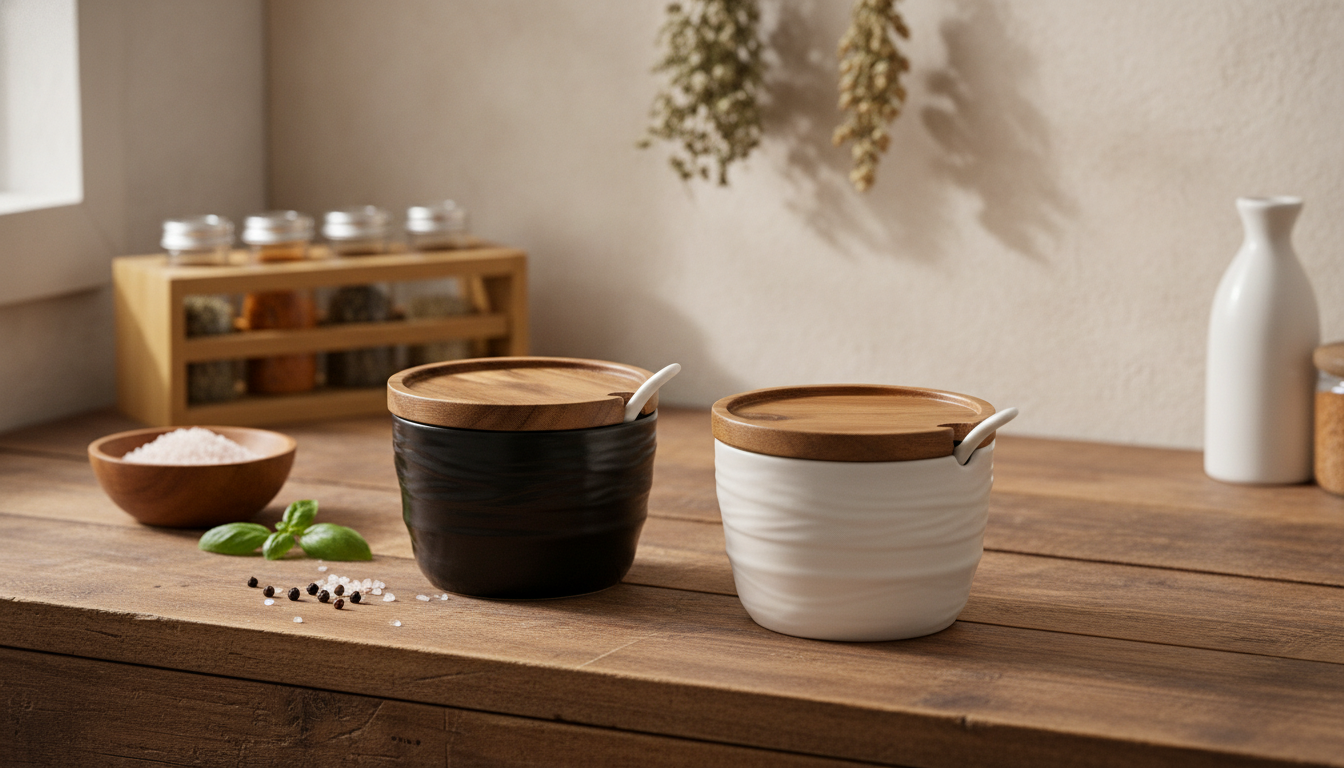
You might use one jar for salt and the other for a frequently used dry seasoning, or keep two types of salt separate. Label them if the contents look alike. Our team favors a setup you can remember during an ordinary weeknight meal.
Use a clean, dry spoon for each jar, and do not return a spoon that has touched wet ingredients. If you plan to use the jars for food, follow the care and food-use instructions that come with the set.
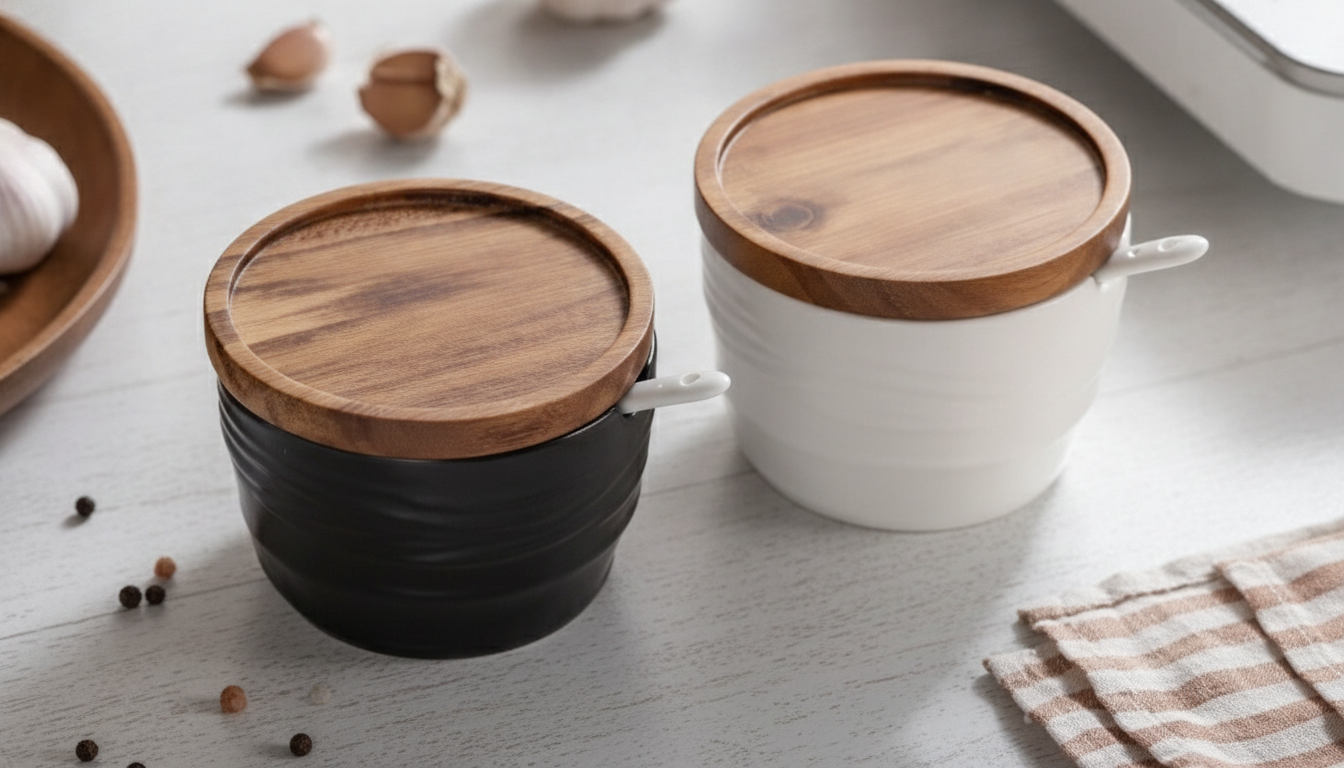
Featured in this guide
Japanese Style Ceramic Salt Jar with Bamboo and Wood Lid – 2pcs Set
The set pairs ceramic jars with bamboo and wood lids, but an airtight seal is not specified. If your kitchen is humid, keep bulk salt in its original packaging or another suitable container and refill a countertop jar as needed. Do not rely on these jars for moisture-sensitive long-term storage.
Before buying, compare the jars’ dimensions and capacity with the counter space and refill routine you have in mind. If you use one jar at the table, decide whether moving it back after meals will suit you; keeping both together may be easier.
Before deciding where the pair will go, compare its listed dimensions with the space you have available. Capacity matters if you refill infrequently, while care instructions matter if you want to know how to clean the ceramic and lids. If lid fit is important to you, review the product details rather than assuming how closely the lids sit.
In particular, a lid should not be treated as airtight unless an airtight seal is explicitly specified. For a humid kitchen, keep bulk salt in its original packaging or another suitable storage container, then refill a countertop jar as needed. That lets the jars serve their convenient, close-at-hand role without relying on them for long-term or moisture-sensitive storage.
Think, too, about your available counter space after meal prep begins—not only when the counter is empty. Will both lids lift easily? Can you reach the jars without moving a hot pan or crossing a splash-prone area? If the answers are yes, the pair has a practical place in your routine. View the two-piece salt jar set and decide whether it suits your space and the seasonings you reach for most.
The Elegant Green Leaf Ceramic Bathroom Set – 4-Piece Eco-Friendly Organizer keeps small car items in designated pockets instead of loose on the seat, pairing with the featured product during everyday use.
Japanese ceramics are often referred to broadly as yakimono , while particular wares have their own names. This salt jar set should not be assigned to a named ware tradition without supporting information.
Japanese ceramic traditions vary by region, technique, and use; examples include Arita porcelain, Bizen ware, and Shigaraki ware. Those traditional wares are distinct from a contemporary product described as Japanese style.
Kintsugi is a repair practice that highlights breaks rather than hiding them, and it is often associated with finding value in an object’s history and imperfections. It is not a specified feature of this salt jar set.
Raku is a Japanese pottery tradition associated with hand-formed tea bowls and particular firing practices. A Japanese-inspired design should not be called raku unless its materials and making process support that description.





Leave a comment
You must be logged in to post a comment.