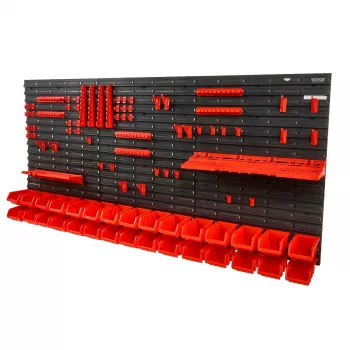
A wall-mounted bin system can turn cluttered screws, fittings, and small tools into a tidy, easy-to-find setup. When every fastener has a “home,” projects move faster, mistakes drop, and the workbench stays clear. Below are the practical details that matter most—what these organizers solve (and what they don’t), the features worth comparing, the best mounting locations, and a simple labeling plan that stays organized through real garage and workshop life.
Think of wall bins as your “parts station.” They’re best for anything you handle in handfuls: screws, anchors, terminals, hose clamps, O-rings, rivets, and small repair items. For heavier tools, keep the load on sturdy shelving or cabinets and use wall bins to support the workflow around those tools.
Most wall bin systems look similar at a glance, but a few small differences decide whether it feels solid and convenient—or frustrating after a few weeks.
| What to check | Why it matters | Practical target |
|---|---|---|
| Number of bins | More separation means less mixing and faster retrieval | 30–48 bins for common fasteners and small parts |
| Mount strength | Prevents bins from falling during daily use | Rails/panels anchored into studs or appropriate wall anchors |
| Bin shape | Affects how easily parts can be grabbed | Open-front bins for quick pick-up; deeper bins for bulk items |
| Label area | Supports repeatable organization | Flat front lip or face that accepts tape/labels |
| Workflow fit | Keeps most-used parts within reach | Frequently used bins between chest and eye height |
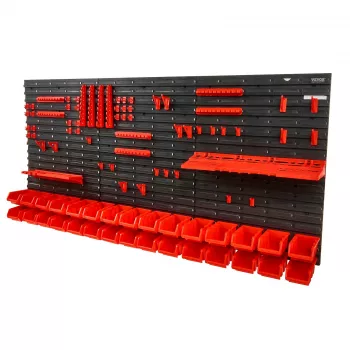
If the goal is a dedicated “grab-and-go” station for small parts, a 30- or 48-bin wall-mounted layout keeps the categories visible and easy to access during repairs and builds. The two size options help match your available wall space and how many types of parts you keep on hand.
See the available organizer here: Wall Mounted Storage Bins Organizer with 30/48 Bins for Garage and Workshop.
A good “rule of reach” is simple: if you can grab the right bin without stepping around cords, open drawers, or a rolling cart, you’ll actually keep using the system—and it will stay organized.
Orderly storage supports a safer, more efficient workspace—especially when floors and work areas stay clear. For general guidance on keeping work areas clean and organized, see OSHA’s housekeeping overview: https://www.osha.gov/housekeeping. For a broader safety framework that emphasizes reducing hazards through better systems and organization, NIOSH’s hierarchy of controls is also a helpful reference: https://www.cdc.gov/niosh/topics/hierarchy/default.html.
For an extra layer of micro-sorting (especially for tiny items like fuses, specialty bits, or single-use fasteners), a compact compartment organizer can complement wall bins. For example: 7 Day Pill Organizer Box can work well as a small “grab kit” for a specific project type when you don’t want to pull from multiple bins.
Mounting into studs is usually the strongest option and helps the system stay rigid as bins are pulled on and rehung. If studs aren’t available, use wall anchors rated for your wall type and expected load, and keep heavier bins in the lower rows.
Put the most-used items between chest and eye height, and group bins by task (wood screws together, electrical together, plumbing together). Keep a clearly labeled “misc/unknown” bin so unsorted hardware doesn’t get mixed into your organized categories.
More bins means more separation, which reduces mixing and speeds up retrieval. Choose 30 bins for tighter wall space or fewer part categories, and 48 bins if you keep a wider variety of fasteners and small parts on hand.




Leave a comment