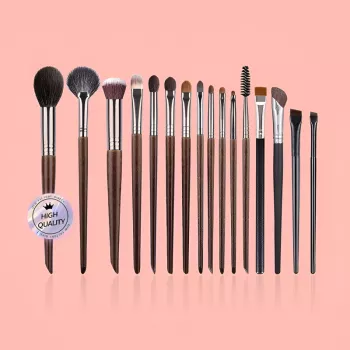
A complete brush kit can simplify everyday makeup by matching the right brush shape to each step—base, cheeks, eyes, and finishing. A 16-piece set typically includes a balanced mix of face and eye tools, so you can keep creams separate from powders, blend without muddying color, and get more consistent results from look to look. If you’re building a streamlined kit for daily wear or experimenting with more defined techniques, the right brush lineup makes every product easier to place and easier to control.
Most 16-piece kits are designed to cover a full face—from complexion to detail work—without forcing one brush to do too many jobs. Face brushes typically handle base makeup (foundation and powder) plus complexion shaping (blush, bronzer, contour, highlight). Eye brushes focus on placement, blending, definition, and detail work for liner and brows.
A larger set also reduces the need to “double up” one brush for multiple products. That matters more than it seems: using the same brush for bronzer and blush can dull both colors, and using a dark eye brush in a light shade can create unwanted gray tones. Many routines work best when brushes are grouped by texture—liquids/creams vs. powders—so the finish stays smooth and the color stays true.
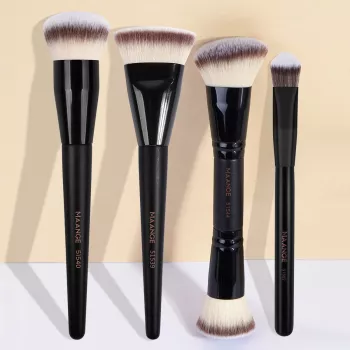
Brush performance comes down to shape, density, and the product texture you’re using. Dense face brushes generally suit liquid or cream products because they press product into the skin for coverage. Fluffier face brushes generally suit powders because they diffuse pigment for a softer, more even finish. For eyes, smaller brushes control placement; larger blending brushes soften edges and transitions. A dedicated brow or liner brush helps you stay precise and keeps deep pigments from staining lighter tools.
| Brush category | Typical shape | Best for | Quick tip |
|---|---|---|---|
| Foundation/base | Flat or dense rounded | Liquid foundation, skin tint, cream base | Use light pressure and short strokes to avoid streaks |
| Concealer/detail face | Small flat or small rounded | Under-eye and spot concealing | Tap to build coverage; avoid dragging delicate areas |
| Powder | Large fluffy | Setting powder, finishing powder | Press in oily zones; sweep lightly elsewhere |
| Blush/bronzer | Medium fluffy angled or rounded | Powder blush, bronzer | Start with less pigment and build gradually |
| Contour/highlight | Angled or tapered | Cheek/jaw contour, cheekbone highlight | Keep contour brushes smaller for sharper placement |
| All-over lid | Flat shader | Packing shimmer or matte on the lid | Pat product on; blend edges with a second brush |
| Blending/crease | Fluffy dome | Softening crease and transitions | Blend with small circular motions, then windshield-wiper |
| Smudge/precision | Short dense | Lower lash line, outer corner depth | Tap and build; a little pigment goes far |
| Liner/brow | Angled or fine tip | Gel liner, brow pomade/powder | Wipe immediately after use to prevent product hardening |
If you want one kit that can handle face, cheeks, eyes, and finishing, the 16-Piece Makeup Brush Set is an easy starting point for building consistent steps—especially when you’re separating cream tools from powder tools.
Softness matters for frequent use: scratchy fibers can irritate skin and can even disrupt base makeup by lifting product as you buff. Density influences payoff—denser brushes typically lay down more product and coverage, while fluffier brushes diffuse pigment for a lighter, more airbrushed effect. A balanced handle with a secure ferrule (the metal part holding the bristles) helps you keep pressure consistent, which reduces patchiness and hand fatigue during blending.
Quick quality checks help, too. Even bristle trimming and a clean, tight ferrule are simple signs of better durability. If bristles splay immediately after the first wash or shed heavily with gentle sweeping, the brush may not hold up well in a daily routine.
A full face doesn’t need complicated technique—just the right order and the right brush for each texture.
Base: Use a dense foundation brush for liquids and creams. Work in thin layers, then switch to a fluffy powder brush to set. This keeps your base smooth while preventing over-application of powder.
For additional hygiene guidance, it’s worth reviewing the FDA’s recommendations on cleaning and sanitizing cosmetics and general skin-care hygiene basics from the American Academy of Dermatology.
For travel or gifting, a single set can cover face and eyes without extra add-ons. If you’ll be doing your makeup on the go, consider pairing your brush kit with a tool that supports your overall routine, like the Electric Massage Hair Growth Comb for quick scalp care alongside your everyday beauty essentials.
Wash brushes used with liquids or creams more often (about 1–2 times per week if used daily) and powder brushes less often (about every 1–2 weeks). Spot-clean when you notice streaking, stiffness, lingering odor, or when colors start transferring oddly between products.
Synthetic bristles are commonly preferred for liquids and creams because they’re typically easier to clean and don’t absorb as much product. Natural bristles can work well for powders, but performance varies—focus on softness, density, and how evenly the brush blends on your skin.
After rinsing, gently squeeze out excess water, reshape the bristles with your fingers, and let the brush dry flat or with the bristles angled downward. Avoid heat and make sure the ferrule area doesn’t stay wet, since trapped moisture can loosen the brush over time.



Leave a comment