A day-by-day pill organizer can reduce missed doses, cut down on daily sorting, and make routines easier at home or on the go. A well-made 7-day box also gives a quick visual cue that helps prevent second-guessing (“Did I take it?”). Below are practical tips on what to look for, how to set one up clearly, and simple habits that support safer, more consistent use of medications and supplements. For more guidance, see Pill organizing/organizers: Good? Bad? – Mayo Clinic Connect.
Why a day-by-day organizer helps
- Turns a daily sorting task into a once-a-week setup that’s faster and less stressful.
- Makes it easy to see whether a dose was taken—without relying on memory.
- Helps caregivers coordinate routines by providing a clear visual check.
- Supports travel and busy schedules by keeping doses grouped and ready.
- Can reduce mix-ups when multiple medications or supplements are used.
For medication safety fundamentals (like reading labels and avoiding dangerous mix-ups), the FDA’s guidance is a solid reference: Tips for Taking Medicines Safely. For further reading, see Device Review: The MedCenter Talking One-Month Medication ….
What to look for in a 7-day pill organizer box
- Compartment layout: one section per day, with lids that open smoothly and close securely.
- Capacity: enough space for your largest tablets/capsules; consider bulky supplements.
- Legibility: clear day labels that are easy to read in low light.
- Portability: a compact profile that fits a bag or nightstand without tipping.
- Durability: sturdy hinges and closures that hold up to daily handling.
- Ease of cleaning: surfaces that wipe clean and don’t trap powder residue.
- Safety considerations: store out of reach of children and pets; child-resistant features may be preferred depending on household needs.
If you’re managing prescriptions with special instructions (timing rules, food interactions, or “do not crush” warnings), MedlinePlus offers an approachable overview: Taking Medicines.
Quick comparison: organizer features and who they suit
Use this checklist to match a box to routine complexity, dexterity needs, and travel frequency.
Common features and best-fit routines
| Feature |
Best for |
Watch for |
| Large daily compartments |
Multiple supplements or big tablets |
May be bulkier in a purse or pocket |
| Tight, snap-close lids |
Travel and bags that get jostled |
Can be harder for arthritis or limited grip strength |
| High-contrast day labels |
Low vision or quick checks |
Labels that rub off over time |
| Slim, compact profile |
Minimalist daily routines, commuting |
Less room for oversized capsules |
| Easy-open tabs |
Dexterity challenges |
Ensure it still closes securely to prevent spills |
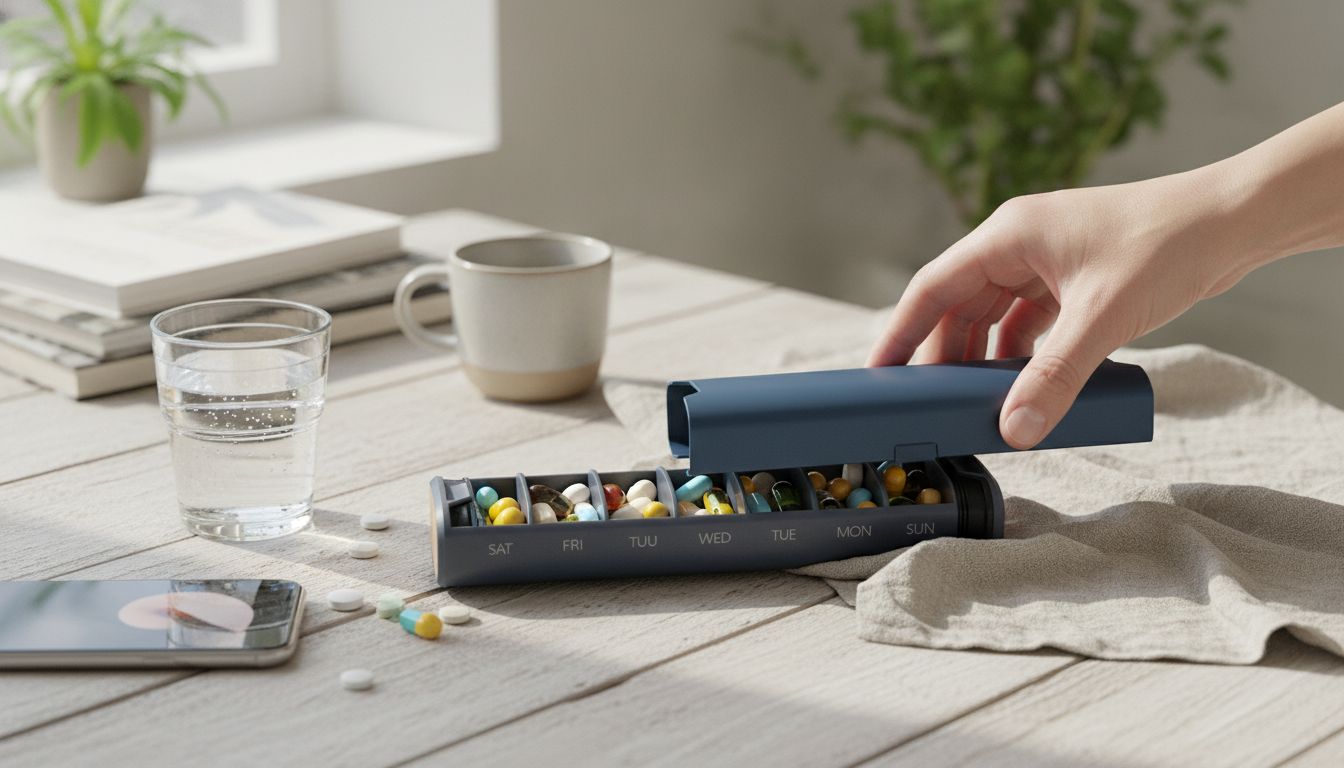
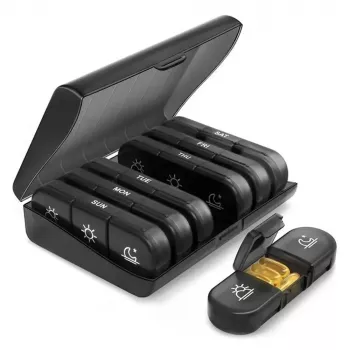
A simple weekly format is often the easiest to maintain, especially when you want a quick “at a glance” confirmation during hectic weeks. The 7 Day Pill Organizer Box is designed for organizing doses by day, helping keep medications and supplements consistent across the week.
- A straightforward weekly layout for organizing doses by day.
- Useful for keeping a consistent routine for medications and supplements.
- A practical fit for nightstands, desks, and packing for short trips.
- Makes adherence visible at a glance—helpful during busy weeks.
- Check the product page for the most current photos, details, and availability.
How to set it up for the week (without confusion)
- Pick a consistent refill time (many people choose Sunday evening) and use bright, direct lighting.
- Wash and dry hands; work on a clear surface to reduce dropped pills and mix-ups.
- Use one bottle at a time: place that medication into the correct day compartment(s) before opening the next bottle.
- Keep original containers nearby so you can verify names, strengths, and directions while filling.
- If instructions change, reset affected days rather than “topping up” on top of old pills.
- If pills look alike, pause and confirm—some medications should stay in original packaging for stability or identification. When in doubt, ask a pharmacist to confirm what can be safely organized together.
For added clarity, consider keeping a short paper or phone note with: medication name, dose, time of day, prescribing clinician, and pharmacy phone number. This helps if a caregiver fills the box or if you need quick verification while away from home.
Daily habits that make the organizer work better
- Pair doses with a stable routine: breakfast, brushing teeth, or bedtime.
- Place the box where it will be seen at the right time (but away from children and pets).
- Use a reminder alarm if doses must be taken at specific times.
- When traveling, keep it in your carry-on to avoid missed doses if checked luggage is delayed.
- If a dose is missed, follow directions on the label or from your pharmacist—avoid doubling up unless instructed.
Care, cleaning, and storage
More helpful picks for everyday routines
FAQ
Can different medications be stored together in the same compartment?
Often yes for routine use, but some medications should stay in original packaging due to stability, moisture sensitivity, or special instructions. If you’re unsure, confirm with a pharmacist before combining them.
What if a dose is missed?
Follow the specific medication label guidance, since timing rules and warnings vary. When uncertain, contact a pharmacist or prescriber for safe instructions rather than doubling up.
How often should a pill organizer box be cleaned?
Light cleaning during weekly refills is a good baseline, with deeper cleaning as needed if residue builds up. Make sure it’s fully dry before refilling.
Recommended for you




Leave a comment