Calm Chest, Calm Mind: A Practical Guide to Easing Stress-Related Chest Discomfort
Chest tightness, aching, or pressure can feel alarming—especially when it shows up during stressful moments. While any new, severe, or worsening chest pain should be medically evaluated, stress and anxiety can also trigger very real physical sensations in the chest through muscle tension, rapid breathing, and a heightened nervous system response. The goal is twofold: stay safe (know the red flags) and build a reliable routine that helps your body settle when stress-driven symptoms flare.
When chest pain needs urgent medical attention
Stress tools can be helpful, but they should never replace medical evaluation when symptoms may be serious.
- Call emergency services right away for chest pressure/tightness with shortness of breath, sweating, nausea, fainting, pain radiating to arm/jaw/back, or sudden severe symptoms. For warning signs, see the American Heart Association.
- Seek same-day medical care for new chest pain, persistent chest pain lasting more than a few minutes, or symptoms that are different from your usual anxiety sensations.
- If there is a history of heart disease, high blood pressure, diabetes, high cholesterol, smoking, or strong family history, treat chest symptoms more cautiously.
- When in doubt, choose medical evaluation first; calming steps are supportive, not a substitute for diagnosis. General guidance is also available from MedlinePlus.
Why stress and anxiety can create chest pain-like sensations
- Fight-or-flight response: Adrenaline increases heart rate and muscle tension, which can feel like pressure or aching in the chest wall.
- Breathing changes: Fast, shallow breathing or hyperventilation can cause chest tightness, lightheadedness, tingling, and a sense of air hunger.
- Muscle guarding: Shoulders, neck, and chest muscles can tighten during stress, leading to soreness or sharp, localized pain that changes with posture or touch.
- Digestive effects: Stress can worsen reflux or stomach irritation, which may mimic burning chest discomfort.
- Fear feedback loop: Noticing a sensation → catastrophic thoughts → more adrenaline → stronger sensations. (For more on anxiety’s body effects, visit the National Institute of Mental Health.)
A quick calm-down sequence for the moment symptoms begin
Use this as a short “reset,” then reassess. If symptoms escalate or any red flags appear, seek urgent care.
- Pause and label: Name what you notice (“tight chest,” “racing heart,” “shallow breath”) without adding a worst-case story.
- Reset posture: Sit upright, shoulders down, jaw unclenched. If safe, loosen tight clothing around the chest/neck.
- Breathing drill (2–3 minutes): Inhale gently through the nose, then exhale longer through pursed lips. Keep the inhale easy; let the exhale do the work.
- Grounding: Identify 5 things seen, 4 felt, 3 heard, 2 smelled, 1 tasted to shift attention out of panic.
- Warmth or gentle pressure: Place a warm pack on the upper chest/neck or rest a hand over the sternum if it feels soothing.
- Recheck after 5 minutes: Note whether intensity drops, stays the same, or increases. Choose medical care if uncertain.
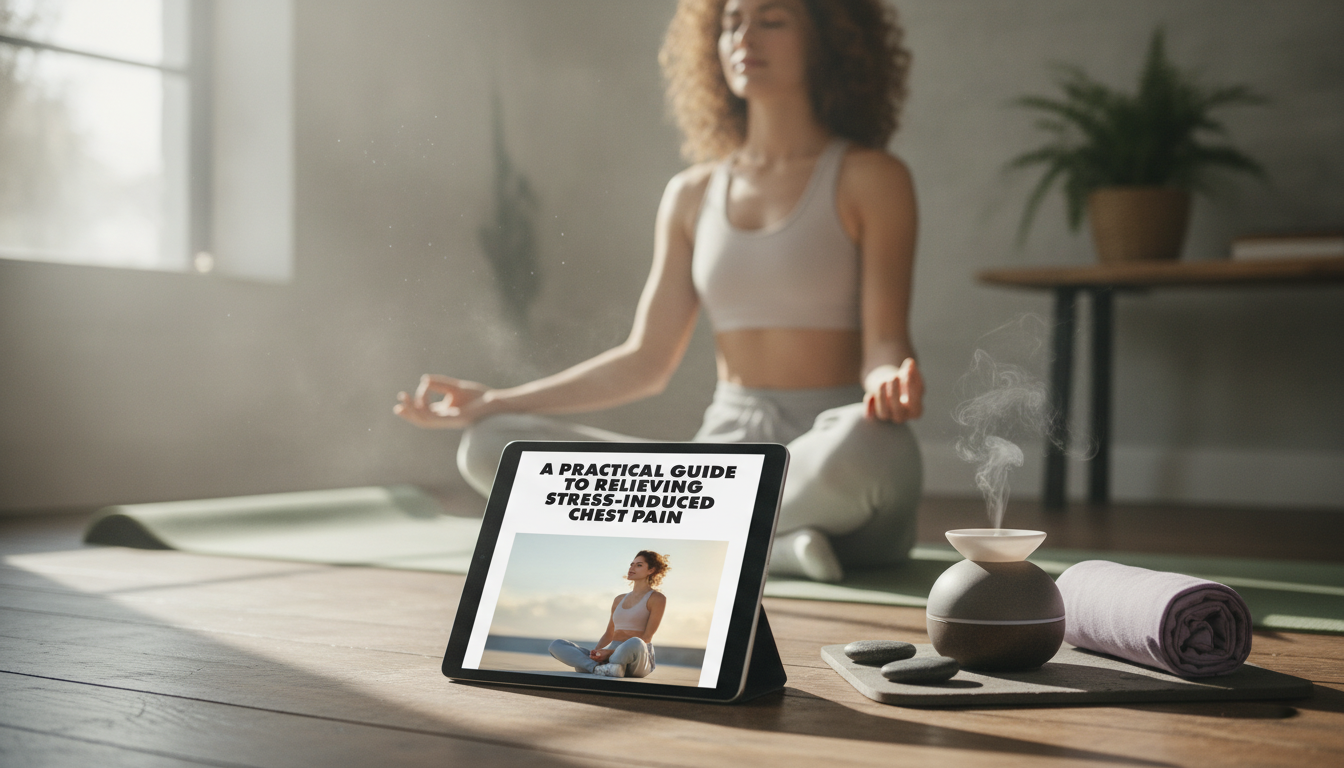
If you prefer following a structured script during flare-ups, Calm Chest, Calm Mind: A Practical Guide to Relieving Stress-Induced Chest Pain (Digital Download) organizes the sequence into a repeatable checklist you can keep on your phone.
The “Anxiety vs. emergency” self-check
- Location and type: Stress discomfort is often sharp or sore and may change with movement or touch; cardiac pain is often pressure-like and may not change with pressing the area.
- Timing: Anxiety symptoms may peak quickly and fluctuate; concerning pain may persist or steadily worsen.
- Breathing: Hyperventilation often brings tingling in hands/face and dizziness; test slow exhale breathing to see if symptoms ease.
- Context: Symptoms during conflict, deadlines, or rumination may point to stress, but context alone is not a guarantee.
- Safety rule: If uncertainty remains, choose medical evaluation.
Fast symptom checklist (use for tracking and deciding next steps)
| Check item |
What to note |
Next step |
| Pain quality |
Pressure, burning, sharp, sore, stabbing |
Pressure/heaviness + red flags → urgent care |
| Duration |
Seconds, minutes, ongoing >10 minutes |
Persistent/worsening → urgent care |
| Radiation |
Arm, jaw, back, shoulder, none |
Radiation → urgent care |
| Breathing effects |
Worse with deep breath? improves with slow exhale? |
Improves with calm breathing may suggest stress component |
| Associated symptoms |
Sweats, nausea, fainting, severe shortness of breath |
Any present → emergency evaluation |
| Trigger context |
Panic, conflict, caffeine, poor sleep, reflux foods |
Reduce triggers + plan coping steps |
Daily practices that reduce recurrence over time
For a body-based approach that supports posture, breathing mechanics, and upper-back mobility, A Practical Guide to Functional Strength Training (Digital eBook Download) can help you build a consistent movement routine that complements stress management.
A simple plan for flare-ups at work, in public, or at night
If guided audio helps you stick with breathing or grounding in busy environments, consider using simple wired headphones such as 3.5mm/Type-C Wired Gaming Earbuds with Mic & Detachable Cable for a consistent, low-distraction setup.
Digital guide and checklist for structured stress relief
FAQ
Can anxiety really cause chest pain that feels serious?
Yes. Anxiety can trigger adrenaline, muscle tension, and breathing changes that create real chest pressure, soreness, or tightness. Because serious conditions can feel similar, any new, severe, or unusual chest pain should be medically evaluated.
How long can stress-related chest tightness last?
Panic sensations often peak quickly and then ease, but tight breathing patterns and muscle guarding can leave lingering soreness for hours or longer. If discomfort persists, worsens, or includes red-flag symptoms, get urgent medical care.
What is the fastest breathing method to calm chest tightness from stress?
Try a gentle nasal inhale followed by a longer, slow exhale through pursed lips for 2–3 minutes. Keep the breath soft to avoid over-breathing, then reassess how your chest feels.
Recommended for you





Leave a comment