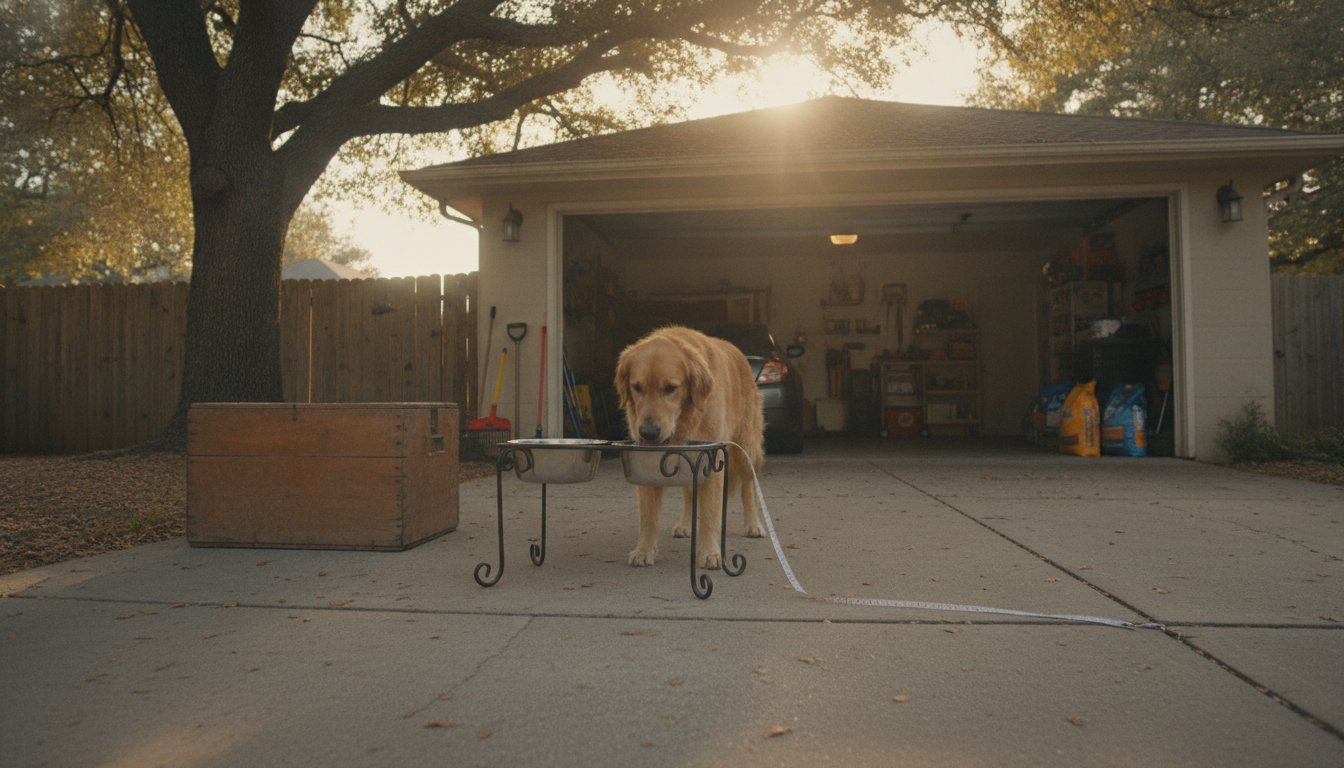
For most large dogs, an elevated bowl should sit close to the height of the dog’s lower chest—typically right around the level of the elbow when your dog is standing naturally. A practical rule is to choose a stand that brings the rim of the bowl to about 4–8 inches below the top of the shoulder, which often lands in the 10–15 inch range for many large breeds, depending on build.
Stand your dog on a flat surface with a relaxed posture. Measure from the floor to the bottom of the chest (near the sternum) or to the elbow. The ideal elevated feeder height usually places the bowl rim roughly at that elbow-to-lower-chest level so your dog can eat without reaching far down or craning the neck upward.
If the bowl is too low, your dog will hunch the shoulders and drop the neck sharply, which can look awkward and uncomfortable—especially during longer meals. If it’s too high, your dog may lift the head and extend the neck to reach the food, which can also strain posture and make swallowing less natural. The goal is a neutral, easy stance with minimal bending.
Deep-chested dogs may benefit from a slightly higher setup than blockier dogs of the same weight, because their sternum sits higher off the ground. Giant breeds often need stands above 15 inches, but measuring your specific dog beats guessing by breed label—two dogs with the same “large” designation can have very different leg and chest proportions.
An adjustable elevated feeder is a smart pick for fast-growing large-breed puppies, multi-dog households, or dogs that are between standard sizes. It also lets you fine-tune height if you notice posture changes after a few meals.
For a more detailed measuring walkthrough and sizing examples, visit the complete guide on elevated bowl height.
It depends on the dog and the reason. Elevated bowls are often used to improve comfort and posture, but the best choice is the height that keeps your dog eating in a natural, relaxed stance—ask your vet if your dog has neck, back, or joint issues.




Leave a comment