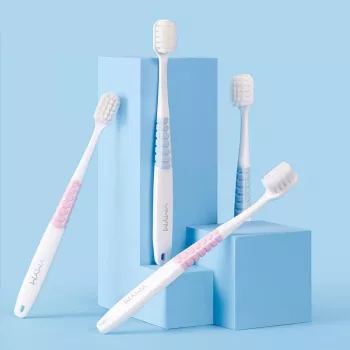
A wide head toothbrush is designed to cover more surface area with each stroke, which can make routine brushing feel quicker and more consistent—especially for people who struggle to reach back teeth or maintain even pressure. The key is choosing a head size and bristle type that cleans effectively without irritating gums.
A wide head toothbrush uses a broader brush head that contacts more tooth surface per pass compared with many standard designs. Many people like the “full-coverage” feel because it can make brushing feel steadier and less fiddly, especially when moving across flatter surfaces like the front teeth and chewing surfaces.
That said, wider isn’t automatically better for everyone. Mouth size, tooth crowding, and gum sensitivity all influence whether a larger head feels comfortable and whether it can maneuver where you need it most.
Because the bristles sweep a larger area at once, a wide head can reduce how many passes it takes to cover the same surfaces. For anyone prone to rushing, fewer strokes can translate into more consistent overall coverage—especially on molars.
A broader bristle field may help distribute force more evenly, reducing the temptation to “dig in” on a single spot. This can be helpful for people who tend to scrub aggressively, as long as brushing pressure stays light.
Some users simply find a larger head feels more stable against the teeth, making it easier to guide with controlled, steady motions rather than quick back-and-forth scrubbing.
When assisting children, seniors, or anyone with limited dexterity, a wide head can simplify coverage—provided the technique remains gentle and the caregiver can still reach back teeth without forcing the brush.
A wide head toothbrush often works well for adults with larger mouths, people who prefer fewer brushing passes, and anyone aiming for reliable coverage on the chewing surfaces of molars. It can also suit those who like a steady routine and want the brush to feel “secure” during brushing.
On the other hand, a smaller or standard head may be more comfortable if you have a small mouth, a pronounced gag reflex, tight crowding, or braces/complex dental work where maneuverability is critical. Getting the bristles to hug the gumline and reach behind the last molars is easier when the head can pivot in tight spaces.
If gum tenderness, recession, or frequent bleeding is a concern, prioritize soft bristles and lighter pressure over head size. Technique tends to make the biggest difference in comfort.
The tradeoff is usually coverage versus precision. Wider heads can feel efficient on broad surfaces, while smaller heads can make it easier to angle along the gumline and navigate the back corners of the mouth. Whichever you choose, gentle technique and full-mouth coverage are what matter most.
| Feature | Wide head | Standard/smaller head |
|---|---|---|
| Surface coverage per stroke | Higher | Moderate |
| Maneuverability around tight areas | Moderate | Higher |
| Comfort for small mouths/gag reflex | May be challenging | Often easier |
| Best-use scenarios | Everyday full-coverage brushing, larger mouths, steady technique | Crowded teeth, braces, sensitive gag reflex, precision along gumline |
| Common mistake to avoid | Scrubbing too hard because it “feels efficient” | Missing surfaces due to too-small strokes or rushed coverage |
Hold the handle lightly (many people do well with a pen-like grip) and let the bristles do the work. If the bristles splay outward, pressure is likely too strong.
Place the bristles where the tooth meets the gum and angle them slightly toward the gumline. Use short, controlled motions rather than long, forceful scrubbing. The goal is thorough plaque removal without irritating the gum margin.
Use a predictable route so you don’t miss areas: outer surfaces, inner surfaces, then chewing surfaces. Pay special attention to the back of the last molars and the inside surfaces of the lower front teeth, which can be easy to rush.
Aim for around two minutes total. If comfortable, finish with a brief tongue clean to reduce odor-causing buildup.
For additional guidance on toothbrush basics and daily oral care, see the American Dental Association (ADA) toothbrush resource and the NHS guide to keeping your teeth clean.
It can be gentle when paired with soft bristles and light pressure, but gum comfort depends more on technique than head size. If gums bleed or feel sore, reduce pressure and consider a softer brush; consult a dentist if bleeding persists.
It can, especially in larger mouths, but some people find a smaller head easier in tight spaces. If reaching the last molars is difficult, slow down, open slightly wider, and adjust the angle; switch to a smaller head if gagging or crowding is an issue.
About every 3–4 months, or sooner if bristles splay, cleaning feels less effective, or after a recent illness.





Leave a comment
You must be logged in to post a comment.