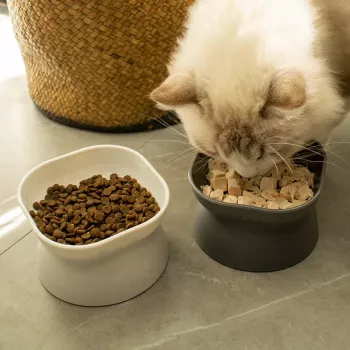
A tilted bowl can make mealtimes calmer by supporting a more natural eating posture, reducing strain on the neck, and helping sensitive cats that dislike deep or narrow dishes. The right setup can also cut down on scattered kibble and the “paws-in-the-bowl” routine some cats use when a dish feels awkward. Below is a practical guide to why a tilt can help, what to look for, and how to keep feeding time clean, consistent, and comfortable.
Many cats eat most comfortably when they can keep their head and neck in a relaxed, forward position rather than bending sharply down into a flat, deep dish. A gentle tilt brings food forward toward the cat’s natural reach, which can change the entire vibe of mealtime—less hunching, less fussing, and often less mess.
Comfort matters because cats can be surprisingly particular about their feeding setup. If the bowl encourages a smoother posture and easier access, many cats stay engaged with the meal instead of pausing, backing away, or hunting for a “better angle.” For general cat-care guidance, the American Veterinary Medical Association (AVMA) Pet Care resources are a helpful reference point.
Not every cat needs a tilted dish, but certain behaviors show up again and again when the bowl shape or position isn’t working. A small adjustment can make eating feel less effortful—especially for seniors, cats with sensitivity around the face, or cats who get “frustrated” with a narrow dish.
If changes in eating behavior come on suddenly, or if your cat seems painful, tired, or nauseated, it’s wise to check in with a veterinarian. For nutrition-related background, the WSAVA Global Nutrition Guidelines provide an evidence-based overview of feeding considerations.
Tilting is only part of the equation. The “best” bowl is the one that fits your cat’s face, eating style, and routine—without sliding around or holding odors that make meals less appealing.
| Cat needs | Bowl features that help | Setup tip |
|---|---|---|
| Senior or stiff posture | Moderate tilt, stable base | Place on a non-slip mat and keep the area uncluttered |
| Messy eater | Tilted surface, adequate rim | Use a washable placemat to catch crumbs |
| Sensitive around the face | Wide, shallow dish | Keep water a short distance away to reduce crowding |
| Wet food diet | Smooth, easy-clean surface | Rinse after each meal to reduce lingering odors |
| Multi-cat home | Stable base, easy to sanitize | Use one bowl per cat and space them apart |
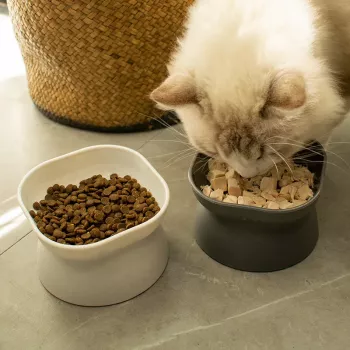
If your cat does better with a forward-leaning, easier-to-reach food surface, the Stress-Free Tilted Cat Food Bowl is designed to support a more comfortable eating angle for everyday use. The tilted presentation can help keep food accessible and may reduce the tendency to scatter kibble or push food out, making it a practical option for calm, consistent feeding routines.
Generally yes when the bowl is stable and sized appropriately; the goal is a comfortable posture and easy access. If your cat shows discomfort, vomiting, or refuses food, adjust placement and portion size and consult a veterinarian.
It may help some cats by improving comfort and access, but it isn’t a treatment for medical issues. For frequent vomiting or rapid gulping, try smaller meals and seek veterinary guidance if symptoms persist.
Wet food bowls should be washed daily, while dry food bowls should be cleaned regularly and sooner if oils or residue build up. Rinse well and avoid strong scents that may discourage eating.




Leave a comment
You must be logged in to post a comment.