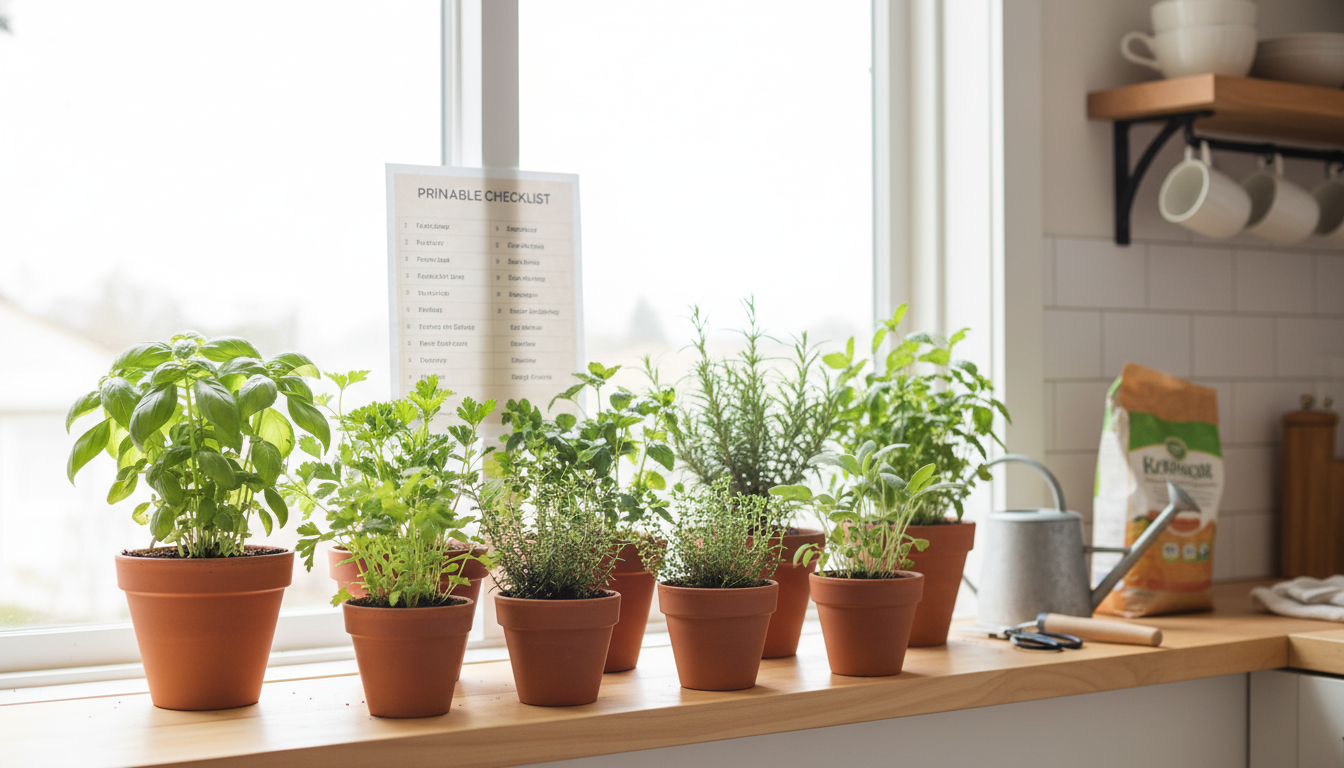
Indoor herbs are one of the simplest ways to start growing food at home—no backyard required. With a bright windowsill, a few pots with drainage, and a low-stress routine, a small “kitchen herb station” can turn into a steady supply of fresh flavor for eggs, pasta, soups, and salads. Below is a practical setup guide, a chart of forgiving herbs, and a printable-style checklist to help keep light, watering, and harvesting on track in busy kitchens and small apartments.
The beginner-friendly indoor herb setup (what matters most)
- Light comes first: A bright south- or west-facing window is ideal. If stems stretch and leaves look sparse, add a small LED grow light on a timer (about 12–14 hours/day).
- Drainage prevents most failures: Choose containers with drainage holes plus a saucer. Soggy roots cause more indoor herb problems than underwatering.
- Use potting mix, not garden soil: A light indoor potting mix drains better and brings fewer pests. For extra airflow around roots, mix in a bit of perlite.
- Start small: Three to five pots are easier to manage than a crowded tray, and consistent care is what makes herbs thrive indoors.
- Avoid extremes: Keep plants away from heat vents and drafty doors. Steady temperatures reduce leaf drop and slowdowns.
Quick indoor herb starter chart
| Herb |
Light |
Watering rhythm |
Best way to start |
Beginner notes |
| Basil |
Bright light / grow light preferred |
Water when top 1 inch is dry |
Seed or small plant |
Pinch tips often; dislikes cold windows |
| Mint |
Medium to bright |
Evenly moist, not soggy |
Plant/cutting |
Very vigorous; keep in its own pot |
| Chives |
Bright |
Water when top 1 inch is dry |
Plant or division |
Cut like a haircut; regrows quickly |
| Parsley |
Bright (tolerates medium) |
Water when top 1–2 inches are dry |
Seed or plant |
Slow from seed; steady moisture helps germination |
| Cilantro |
Bright, cooler spot |
Water when top 1 inch is dry |
Seed |
Bolts faster in warmth; sow small batches |
| Thyme |
Bright |
Let top 2 inches dry between waterings |
Plant |
Prefers drier soil; great for forgetful waterers |
| Oregano |
Bright |
Let top 1–2 inches dry |
Plant/cutting |
Hardy; benefits from regular trimming |
| Rosemary |
Very bright / grow light ideal |
Water when top 2 inches are dry |
Plant |
Slow grower indoors; avoid overwatering |
The easiest herbs to grow indoors (and why they’re forgiving)
- Chives: Handles indoor conditions well, bounces back after cutting, and tolerates beginner mistakes.
- Mint: Grows quickly with moderate light and consistent moisture; keeping it solo prevents it from crowding other herbs.
- Thyme and oregano: Prefer drying slightly between waterings, so they’re resilient when watering is occasional.
- Parsley: Dependable once established; likes regular moisture and bright light without needing high heat.
- Basil: Extremely productive under strong light and responds well to frequent pinching for a steady supply.
Planting choices: seeds, starter plants, or supermarket pots
- Starter plants are the quickest win: Repot into a slightly larger container using fresh potting mix and reliable drainage.
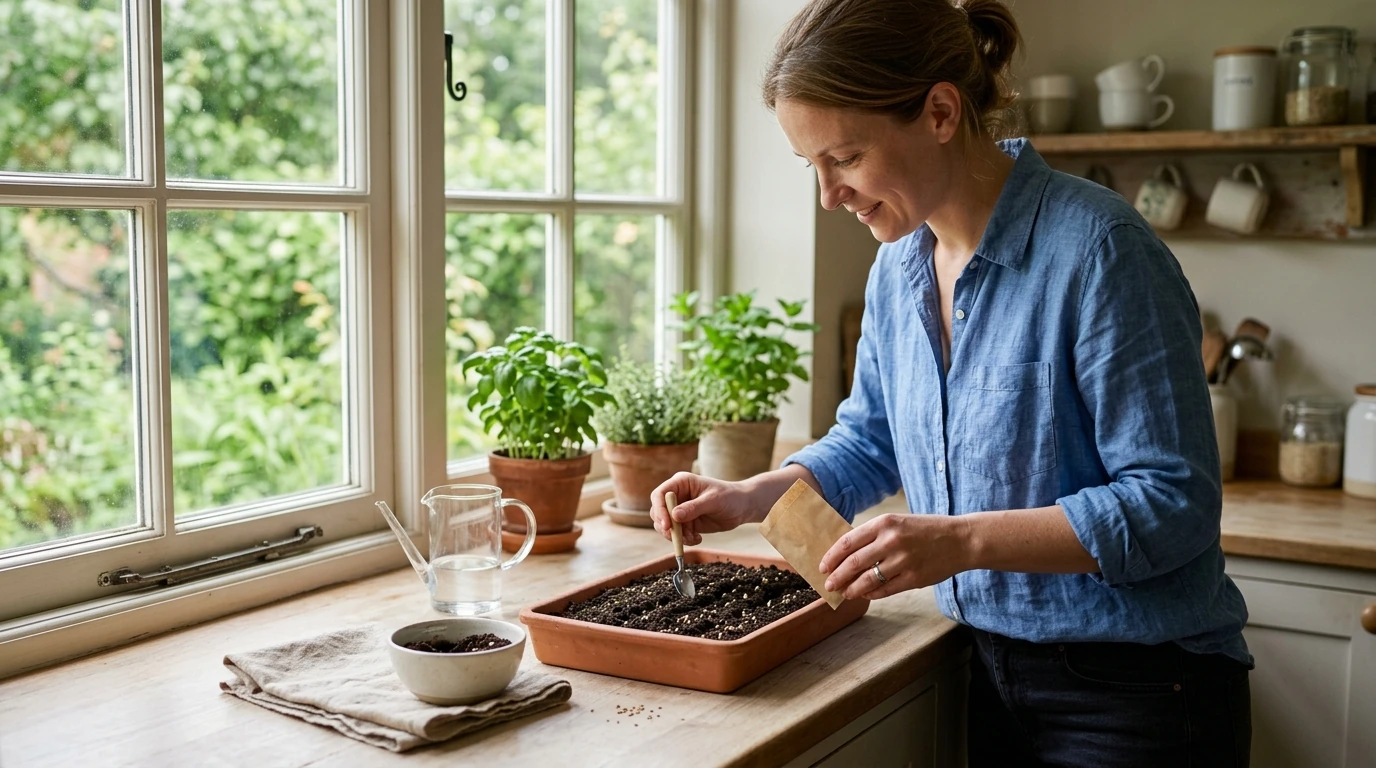
- Seeds are budget-friendly: Use shallow trays or small pots; keep the surface evenly moist until sprouts appear.
- Supermarket “living herbs” need space: They’re often crowded. Gently split the root ball into 2–4 sections and pot separately to reduce die-off.
- Label each pot: Add the herb name and date. Tracking helps troubleshoot slow growth, bolting, or uneven watering.
Watering without overdoing it: a simple routine
- Use the finger test: Water only when the top layer is dry (depth depends on the herb). Woody herbs like rosemary prefer a deeper dry-down than tender herbs like basil.
- Water thoroughly, then drain: Water until it runs out the bottom, then empty the saucer. Standing water invites root rot and fungus gnats.
- Morning is easiest: When possible, water earlier in the day so leaf surfaces and soil dry more predictably.
- If fungus gnats show up: Let the soil dry more between waterings, top-dress with a thin layer of sand, and use yellow sticky traps.
Harvesting and pruning: how to keep herbs producing
Printable-style kitchen herb checklist (daily, weekly, monthly)
If you want a ready-to-use version you can keep on the fridge or in a recipe binder, see Easy Herbs to Grow Indoors: Your Simple Checklist (printable guide).
Common indoor herb problems and quick fixes
A simple way to stay consistent when starting out
For additional routine-building ideas that pair well with a “small daily habits” approach, you may also like A Practical Guide to Functional Strength Training.
More trustworthy growing guidance
For deeper, research-based advice on herb care and indoor growing, these references are helpful: Penn State Extension — Growing Herbs Indoors, University of Maryland Extension — Herbs, and the Royal Horticultural Society — Herbs.
FAQ
What are the easiest herbs to grow indoors for beginners?
Chives, mint, thyme (and oregano), parsley, and basil are reliable starters. They tolerate typical indoor conditions well, and several—like chives and thyme—bounce back even if watering isn’t perfect.
How often should indoor herbs be watered?
Use the finger test rather than a strict schedule: water when the top layer feels dry (about 1 inch for many tender herbs, deeper for woody herbs like rosemary). Always use pots with drainage and empty saucers after watering to prevent soggy roots.
Do indoor herbs need a grow light?
A very bright south- or west-facing window can be enough for many herbs, but basil and rosemary often do better with supplemental light. If growth is leggy with small, pale leaves, add an LED grow light on a timer for about 12–14 hours per day.
Recommended for you






Leave a comment
You must be logged in to post a comment.