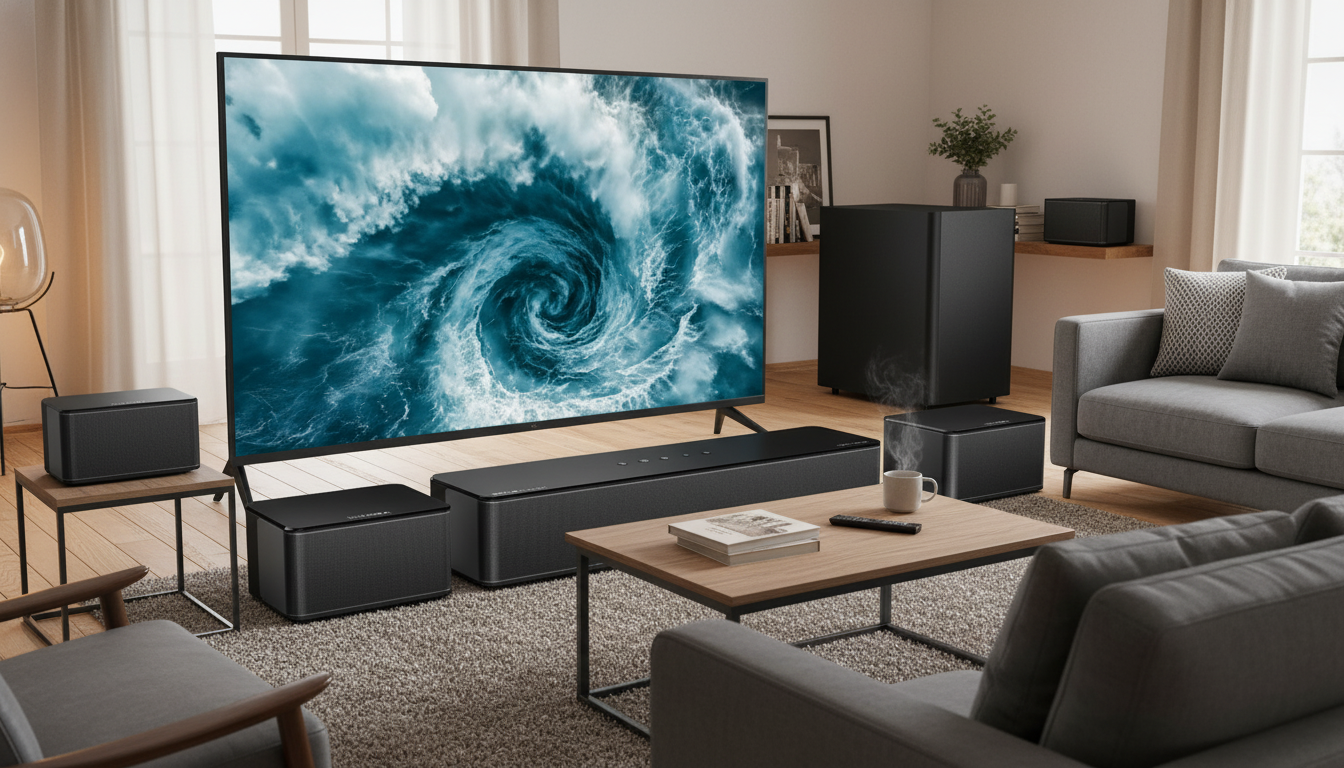
A powerful sound bar can transform everyday TV watching into a more immersive, theater-like experience without a full speaker build-out. This 450W 5.1 system pairs Dolby Atmos processing with a wireless subwoofer for deeper bass, clearer dialogue, and a bigger sense of space—ideal for movie nights, sports, and gaming in apartments or living rooms where simplicity matters.
Dolby Atmos is designed to add a sense of height and spaciousness that standard stereo (and even basic surround) often can’t recreate. When you’re watching supported content, effects like rain, aircraft, or crowd ambience can feel more layered and “placed” in the room instead of sitting flat on the screen.
A 5.1 layout also matters for day-to-day viewing. With a dedicated center channel, dialogue typically stays anchored and easier to follow—especially during action scenes where music and effects can overwhelm voices. Surround processing helps widen the soundstage for atmosphere, movement, and game audio cues.
Real-world rooms influence what you hear. Centered seating, a sound bar placed directly under the TV, and a relatively flat, reflective ceiling can help Atmos cues feel more convincing. Finally, the source has to cooperate: streaming apps, Blu-ray players, and gaming consoles differ in Atmos support and in the audio settings required to pass the right signal. For a deeper technical overview of the format, see Dolby’s official Atmos page.
This type of system is built for a single-step upgrade from TV speakers: higher output, better separation, and a separate wireless subwoofer for low-end impact. It’s a strong fit for medium-size rooms where you want both clarity and satisfying bass without running speaker wire around the space.
For the smoothest setup, pairing with a TV that supports HDMI ARC/eARC is ideal—especially if you want the best format compatibility and simple, single-remote volume control. If you’re comparing TV ports and features, HDMI.org is a reliable reference for ARC/eARC basics.
| Feature | What it means for daily use |
|---|---|
| 450W total power | More headroom for impact in movies and cleaner sound at higher volumes |
| 5.1 channel system | Improved dialogue separation and more distinct effects placement |
| Dolby Atmos processing | Expanded sense of height and immersion when playing supported content |
| Wireless subwoofer | Deeper bass with more flexible placement and fewer cables |
| Sound bar form factor | Simpler setup than a traditional AV receiver + speaker package |
Dialogue clarity: If voices are the reason you’re upgrading, a 5.1 bar’s center channel is the headline feature. For news, sitcoms, and character-driven dramas, start with a balanced preset (or a voice-focused mode) that keeps speech forward without making “S” sounds harsh or thin.
Bass impact: A wireless subwoofer adds the weight that TV speakers can’t—explosions, kick drums, and low rumbles feel physical instead of “tapped out.” Placement matters: putting the sub closer to a wall can boost perceived bass, but too close to a corner can introduce boominess. A small sub-level adjustment often improves clarity more than a big volume jump.
Surround feel: Even when surround is processed rather than fully discrete rear speakers, a well-tuned sound bar can widen the stage and help movement feel smoother across the front of the room. Try to keep seating roughly centered with the bar for the best imaging.
Late-night viewing: If your household is sensitive to volume spikes, enable night mode or dynamic range control. It reduces sudden peaks while keeping speech intelligible, so you don’t have to ride the remote during loud scenes.
Start with the basics: place the sound bar centered under the TV, and position it so the front edge sits close to the edge of your cabinet or shelf. That reduces early reflections that can smear dialogue and detail.
450W 5.1 Dolby Atmos Home Theater Sound Bar with Wireless Subwoofer $379.17 (in stock). A single-package upgrade focused on punchy output, clearer center-channel dialogue, and room-filling immersion.
Not always. For the most seamless experience, a TV with HDMI ARC/eARC and the ability to pass through Dolby audio is ideal; optical connections are more limited and may not carry Atmos. Atmos also depends on the source device/app and having the right audio settings enabled (often bitstream or passthrough).
Start near the front wall, a little away from the corner, then adjust from there. If bass sounds uneven, try the “sub crawl” method (place the sub where you sit, play bass-heavy content, and find the spot in the room where bass sounds smooth). Avoid enclosing the sub in a tight cabinet, and keep volume neighbor-friendly in shared-wall spaces.
Yes—having a dedicated center channel typically makes voices clearer and more consistent at normal listening levels. If your system includes voice enhancement and night mode, those can further improve speech while reducing sudden loud peaks, especially late at night.







Leave a comment